It’s been over twenty years since 9-11. Twenty years since Betty Ong’s airphone conversation came to an abrupt end. Twenty years since 2979 people died in the coordinated attack, approximately 200 of whom jumped from the World Trade Center rather than be incinerated. If you haven’t heard the conversation, it’s still on the internet. If you haven’t seen the towers collapse, you can see that on the internet, too. Note that objects running vertically that make the film appear grainy are people jumping. There are still many gut-wrenching pictures on the internet. 1 Very tellingly, I have not heard even one sick joke about that day. Most unusual, if you think about it.
Even though it’s been over twenty years since the event, Khalid Shaikh Mohammed , the alleged mastermind, has still not been tried, even though he’s been incarcerated for almost twenty years. The official 9/11 report ascribes the motive behind the attack to US support for Israel. 2 It will be shown here that this motive cannot withstand even moderate scrutiny. Note that the same false motive was given for the Arab oil embargo of 1973, which benefited American oil interests due to the price increase which ensued, as well as American coal interests since a large amount of coal was substituted for oil to generate power. 3 It is asserted here that the real motive for 9/11 was to give the US an excuse to maintain a military presence in the Gulf region in order to 1) discourage any OPEC nation ruler from rocking the OPEC boat, and 2) to provide OPEC country rulers with an excuse not to rock the OPEC boat when their constituents would otherwise advocate any action that presents the possibility of undercutting the price of a barrel of crude oil. The execution of Saddam Hussein has rendered the first possibility remote. Obviously, as was the case with the 1973 embargo, this inures to the benefit of American oil and coal interests.
With regard to the motive proffered by the 9-11 Committee, two possible reasons for objection to US support of Israel, both of which are more apparent than real, are: 1) disagreement that Israel exists as an independent sovereign at all; 4 and 2) disagreement with the way the Palestinians who occupied land before the formation of modern Israel have been treated.5 With regard to the first, it is clear that appearances to the contrary notwithstanding, Judaistic, Islamic, and Christian forces all want Israel to exist as it does today. Both dogmatic and historical considerations compel this conclusion. With regard to the second, it will be shown that the Arab league’s support of the Palestinian cause was only ever a pretension that modern Israel was not what was planned since no later than the conclusion of World War I and a cover-up for the fact that they safeguarded Palestine against the establishment of a Jewish theocracy for over 1000 years.
THE FIRST REASON
The first step in the argument against the validity of first reason for objection is to demonstrate how close Islam and Christianity really are. The second step is to expose two problems with Christian dogma, one of which reveals its primary concern with Palestine in general and Jerusalem in particular, and the other one of which reveals the motive behind Crusader massacre of Jews on the way to the Holy Land. The third step will be to show how forces of Islam assisted Christianity by safeguarding Palestine and especially Jerusalem against an earthly threat to the validity of its dogma.
Islam and Christianity are Dogmatically Close
The claim of compatibility is easily demonstrated. First of all, Moslem belief that Allah is the same as the God of Abraham, and thus the same entity as the Christian “God the Father,” is expressly stated in Q29:46: “Our god and your god are one.” Note that equating the Allah with the god of Abraham and emphasizing that there is but one god tends to obscure the fact that the ancient Hebrews were plainly polytheistic. 6 Islam, of course, does not regard Jesus as God, but instead as a mere prophet. However, even though they deny his divinity, the Islam stance on Jesus has a tendency to bolster Christian claims as to his divine nature. They say that he was just a prophet, but "concede" that he was 1) the product of a virgin birth 7; 2) talked while he was still in the cradle (he said he was a prophet) 8; 3) performed miracles 9; and 4) did not die (death was an illusion) 10. If you had to argue that Jesus was the son of god, would you rather proceed from a normal birth, a life without miracles, and a normal death, or from the Quranic description of Jesus ? Most interesting is the Quran's discussion of Mary's lineage in Q3:33-47. Matthew 1:1 et seq. traces the lineage of Joseph to demonstrate that Jesus fulfilled the alleged prophecy concerning the lineage of the alleged messiah 11. Obviously, if Jesus was immaculately conceived, then Joseph is not the father, and his lineage means nothing. Assuming the accuracy of the account of the virgin birth, the only way that the prophecy could have been fulfilled is if Mary was of the line of David. In first century Palestine, nobody would have cared about Mary's lineage. The author of the Quran, however, made it important. A Christian apologist could not have done it any better. Small wonder, then, that the Quran says point blank that the Christians are "nearest to the Believers" (meaning the followers of Allah). 12
Two Problems with Christian Dogma
One (of many) problems with Christian dogma derives from the fact that the purported Jewish messiah failed to save the Jews in any form or fashion. Jesus, a Jew, was the purported Jewish messiah, the coming of whom was purportedly prophesied in Jewish scripture. The problem is that even those Jews who held the prophecy did not think that Jesus was the guy. Had they thought Jesus was the messiah, they would not have united behind Simon bar Kochba in 132 CE in a revolt against Rome. The failure of Jesus to save the Jews in whatever form or fashion would seem to be fatal to any claim that he was the Jewish messiah. By definition, to be the Jewish messiah (or even a Jewish messiah), one must save the Jews in some manner. The Apostle Paul attempted to resolve the paradox in the New Testament book of Romans. There, Paul explains that God has not rejected his chosen people due to their rejection of the messiah he purportedly sent. In Romans 11:25-26 he explains:
Lest you be wise in your own sight, I do not want you to be unaware of this mystery, brothers: a partial hardening has come upon Israel, until the fullness of the Gentiles has come in. And in this way all Israel will be saved ….
This is not Paul’s only passage relevant to the paradox. In Romans 9:27, he quotes Isaiah:
Though the number of the Israelites be like the sand by the sea, only the remnant will be saved. For the Lord will carry out his sentence on earth with speed and finality. (Emphasis added.)
The phrase regarding the Lord “carry[ing] out his sentence on earth” seems to require the conclusion that Paul was not talking about saving souls, but instead was talking about earthly Jewish lives. Assuming this conclusion is correct, we see the first Christian attempt at conversion by threat of annihilation. The passage also raises the question of exactly what constitutes a remnant. If Jews become more numerous than whatever a remnant is, the consequence is that Paul was wrong, those who selected Romans for inclusion in the New Testament were wrong, and Christian dogma as it has existed for almost two thousand years is wrong. If the Jews ever “become extinct,” or if they all convert en mass to Christianity, the same consequence follows, unless no other Gentiles ever become Christians. Obviously, the question of what constitutes a remnant is not exactly trivial. Most interestingly, Theodor Herzl purported to advocate total assimilation as the solution to the Jewish question - i.e., a mass conversion by all Jews except its leaders, who would be the final generation. 13. It is difficult to see how this was not every bit as much gamesmanship as was Zionism.
The second (of many) problems with Christian dogma arises from Acts 1:6-7. In these verses, Jesus, after having purportedly been resurrected, is asked by his disciples, "Lord, is this the time when you are to restore the kingdom?" Jesus is reported to have responded, "It is not for you to know about dates or times, which the Father has set within his own control." Jesus' response, if factual, would constitute a tacit acknowledgement that restoring the kingdom was at least one aspect of his mission. The question thus becomes what does “restore the kingdom” mean? It is clear that at the time these words were written, it meant a Jewish theocracy in Palestine, complete with a king, a high priest, and the temple, which had yet to be destroyed. (ftnt me) If this were to be accomplished without Jesus being the one to accomplish it, then bye, bye Christianity. It is very easy to read post-Pauline Palestinian history as directed toward preventing restoration. The destruction of the temple, the original Diaspora, the Byzantine-Sasanian War, the Crusades, the Crimean War, the Russo-Japanese War, and WWI are all susceptible to this interpretation. Given the obviousness of historical attempts at prevention by Christian forces, the current occupation of Palestine by Jews who are not going to establish anything even remotely resembling a theocracy is the best Christianity can hope for.
Islam Safeguarded Palestine for Christianity
Now for some history, which, when viewed against the background of the preceding discussion of the meaning of the phrase “restore the kingdom” found in Acts 1:6-7, clearly demonstrates three things. The first is that there has been way to much ado over Palestine in general and Jerusalem in particular for the interpretation of “restore the kingdom” given above to be incorrect. The second is that Islam safeguarded the Holy Land against the establishment of a Jewish theocracy on behalf of forces of Christianity for over one thousand years. The third is that given the obviousness of historical attempts at prevention by Christian forces as well as non-Christian forces acting on their behalf, the current occupation of Palestine by Jews who are not going to establish anything even remotely resembling a theocracy is the best Christianity can hope for.
First, three preliminaries. Preliminary matter number one is that the use of Christian military might to prevent the establishment of a Jewish theocracy presents the appearance of earthly contrivance motivated by the desire to preserve the integrity of Christian dogma as opposed to some heavenly plan played out on the stage of Palestine. Best, then, if the prevention of the establishment of a Jewish theocracy is prevented by non-Christian forces. At least according to appearances, non-Christian forces would lack the motive of preserving the integrity of Christianity as a religion. Islam was invented for this purpose.
Preliminary matter number two is the obvious importance Jews assigned to the temple. Its significance is easily seen from both the way its destruction was used as punishment and Jewish reaction to its defilement. Both are easy to understand when it is remembered that the original temple built by Solomon housed the Holy of Holies (i.e., the Hebrew god’s earthly residence), as well as the Ark of the Covenant. Indeed, 2 Chronicles 3:1 expressly refers to the soon-to-be-built temple as “the house of the Lord.” Furthermore, the physical presence of observant Jews at the temple was required three times per year – Passover, Shavout, and Sukkot. Obviously, the temple was extremely important.
Preliminary matter number three is that odd things can happen when Christians do battle with Muslims. For example, it seems generally accepted that the number of combatants at the seminal battle of the Moorish invasion of the Iberian peninsula was greatly exaggerated, and further that Moorish forces were aided by treachery within the Christian forces. In general, it is easy to see that the Moorish conquests in Iberia were much easier than they should have been. Another example is that the number of combatants at the battle of Dorylaeum in 1097 were grossly exaggerated. Moreover, no archaeological evidence that the battle even occurred has ever been found. Still another example is the misadventures of Boabdil, the Moorish sultan of Granada during the re-conquest of Iberia by Christian forces. His forces fled a smaller Christian force, and when Boabdil followed them, his horse got stuck in the mud while crossing a river, and he was captured. 14 In general, it is easy to see that the Christian re-conquests in Iberia were much easier than they should have been.
The first historical event to receive admittedly cursory treatment here is the conquest of Judea by the Babylonians in 597 BCE. The Babylonians took the Jewish king as well as much of the Jewish aristocracy back to Babylon, and appointed Zedekiah to rule Judea. When Zedekiah subsequently rebelled, the Babylonians responded by, inter alia, destroying the Jewish temple in 586 BCE. In 529, the Persians conquered the Babylonians. The Persians, under king Cyrus, permitted those Jews who wanted to return to Judea and, most importantly for this site, also permitted the temple to be rebuilt, a task which was accomplished in 515 BCE. Note that Cyrus (Koresh in Persian) is expressly referred to as messiah (God’s anointed) in Isaiah 45:1.
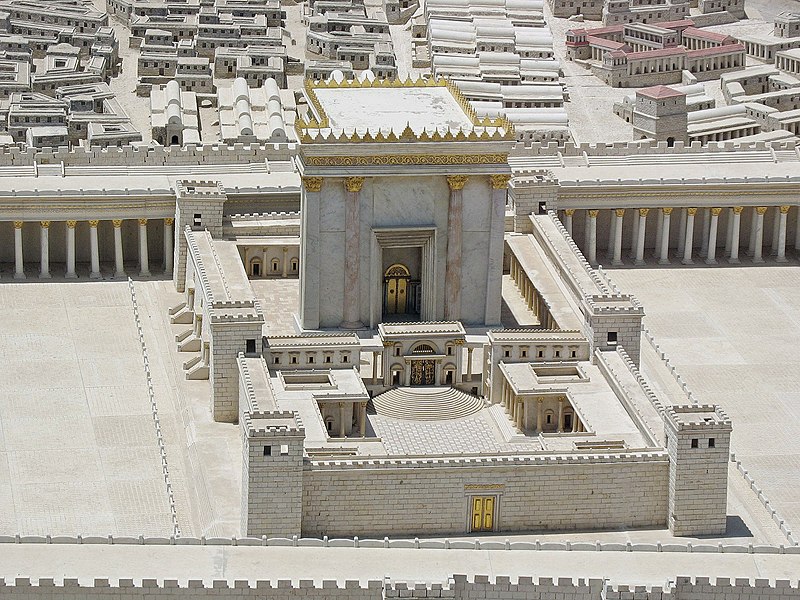
The second historical event to receive admittedly cursory treatment here is the Maccabean Revolt of 167 BCE. At that point, Judea was under the yoke of Seleucid rule, and the Seleucid king Antiochus Epiphanes issued a decree which required that all Jews worship Zeus instead of the Jewish god Yahweh. He then raided and defiled the temple by stealing its valuables, setting up an altar to Zeus, and sacrificed swine on the altar. As if that were not enough, he also caused to be built a gymnasium immediately adjacent to the temple. This was a serious affront to the Jews since the Greeks, equipped with uncircumcised penises, performed gymnastics in the nude. The Jews defeated the Seleucids in 165 BCE, and their first order of business was to cleanse and restore the temple. 15
The third historical event to receive admittedly cursory treatment here is what is known as the bar Kokhba revolt of 132 CE. The modern consensus is that Hadrian’s decision to build a Roman temple on the site of the Jewish temple destroyed in 70 CE was the proximate cause. 16 The military leader for the Jews was born Simon ben Koseba, who was renamed bar Kokhba when a certain Rabbi Akiva equated him with the “star [that would] shoot forth from Jacob” 17, and thus, the messiah. Since only a minority of Jews held any messianic expectations, this was almost certainly an implicit attack on the Christian concept of messianic prophecy and messiahship. (Imagine the Jews having the audacity to say who the Jewish messiah was!). Bad idea! The Romans eventually put down the revolt. For the purposes of this site, three important consequences followed. First is that the Temple Mount was plowed under. (The Romans had destroyed the second temple in 72 CE.) Second is that the Jews in that locale were dispersed to other parts of the world. Third is that a statue of yet another statue of a Roman dictator was erected on the Temple Mount in an effort to make clear that the Temple would never be rebuilt. 18
The fourth historical event treated here is the war between the Persians (Sasanians) and the Byzantines fought from 602 CE to 628 CE. This was the final war of a long series of wars fought over a period of nearly four hundred years. The Jews were allied with the Persians for a much of this final war. Combined Sasanian and Jewish forces captured Jerusalem in 614 CE, and Nehemiah ben Hushiel was appointed ruler of Jerusalem. By now it should come as no surprise that two of the first things he did were to plan the rebuilding of the temple and trace genealogies for the purpose of reestablishing the priesthood. For some reason, the Sasanians stopped using this tactic, well before the war was ended. Moslem “conquest” of Persia began relatively shortly after the war’s conclusion – 633 CE to be more precise - and was for the most part complete by 651 CE. Notwithstanding their long history of armed conflict, the two entities never fought again. The most likely case scenario is that the Byzantines cut a deal with the Persians in 617 CE that involved Persian conversion from Zoroastrianism, which is incompatible with Christianity, to Islam, which has been shown to be very compatible with Christianity.
We have now arrived at Islam’s historical contribution to Christianity. Obviously, the use of Christian military might to prevent the establishment of a Jewish theocracy presents the appearance of earthly contrivance motivated by the desire to preserve the integrity of Christian dogma as opposed to some heavenly plan played out on the stage of Palestine. Best, then, if the prevention of the establishment of a Jewish theocracy is prevented by non-Christian forces. At least according to appearances, non-Christian forces would lack the motive of preserving the integrity of Christianity as a religion. Islam was invented for this purpose. In 610, Heraclius seized the Byzantine throne. At this time, most Meccans favored the Sasanians. Muhammad, an Arab, is said to have begun to receive visions at this time. He is said to have begun preaching publicly in 613. At some point, it was purportedly revealed by Allah to Muhammad that the Byzantines would ultimately prevail, even though the tide was currently against them. 19 Historical considerations suggest that Muhammad was aligned with the Byzantine - and Christian - emperor Heraclius. The fighting between the Byzantines and Persians generally favored the Persians until 622, when Heraclius personally assumed leadership of an offensive. In 622, Muhammad either was evicted from Mecca or fled it for fear of his life. The official explanation is that he no longer held the protection of his powerful uncle. His uncle, however, died in 619, which is not bad timing, but not as good as Heraclius's taking the field. At some point, Muhammad apparently was granted asylum at St. Catherine's Monastery located on the Sinai Peninsula.24 In 627, the Byzantines defeated the Persians at Nineveh, and in 628 Muhammad triumphantly returned to Mecca. That timing is simply impeccable. It is certain that Heraclius and Muhammad were at least not enemies.
Thus began Islam’s custodial function over Palestine. The first stint lasted for more than 450 years. Very early during this period, two Jews claimed to be the messiah, but neither made much headway before Moslem intervention. 20 Most interestingly, the Moslems completed the erection of the Dome of the Rock somewhere between 685 and 688. Wouldn’t you just know it, they built it right in the center of the temple mount on the site where the both the first and second temples were situated. That’s what is known as preemption. When this is considered in conjunction with the timing of the inception of Islam, the doctrinal support lent Christianity by Islam, and two instances of messianic activity nipped in the bud, it must be concluded that the forces of Islam did indeed safeguard Jerusalem against any attempt to “restore the kingdom.”
To be sure, this is not the motive customarily assigned for the Crusades. To be sure, the Byzantine ruler did ask for military help from the west. To be sure, he got more than he wanted, making it look like an attempted power grab on the part of the Crusaders. To be sure, there was some concern over the safety of pilgrims who came to visit the “holy places.” However, the reader will see that the element of Zionism was certainly present, and it should be regarded as conspicuous in its absence when reasons for the Crusades are discussed. It is clear from the Rhineland massacres that the Crusaders were motivated at least in part by preservation of Christian dogmatic integrity. Obviously, the massacres had nothing to do with helping the Byzantines or protecting the holy places. However, they did bear upon the question of what constitutes a remnant. If the massacres were motivated by preservation of Christian dogma, why not the Crusades themselves? Indeed, keeping in mind some of the odd things that happened when Christians fought Muslims, the entire history of the Crusades is easily interpreted as primarily motivated by anti-Zionism and secondarily motivated by covering up the primary motive.
The sixth historical event given very cursory treatment here is the Crimean War. The ostensible cause of the war was a dispute over who had the right to protect the Christian minority in Palestine. In the words of one author:
By favor of old treaties the Czar claimed a certain right to protect the Christians of the faith. France assumed a similar protectorate over the Roman Catholics in Palestine, but the greater number of Greek Christians in the Holy Land, and the powerful support of the Czar, gave those the advantage in the frequent quarrels which arose in Jerusalem between pilgrims from the East and West. 21
Certainly Britain believed that Russia had some type of design on the Holy Land during the time shortly preceding the Crimean War. William Young, the British consul to Palestine, “sent regular reports to the Foreign Office about the steady build-up of ‘Russian agents’ in Jerusalem – their aim being, in his view, to prepare a ‘Russian conquest of the Holy Lands through sponsored pilgrimage and purchases of land for Orthodox churches and monasteries.” 22 “The pilgrims of Russian have been heard to speak openly of the period being on hand when this country will be under Russian government.” 23
For the purposes of this cite, the war is interesting for several reasons. Reason number one is that it looks a lot like the Russians tried to quit after France and England actually entered the war. Maybe – maybe – the Russian political objective was to induce France to interfere for whatever reason with Palestine. Perhaps the most remarkable thing about their intervention – even considering the Charge of the Light Brigade - was the justification given by the intervening powers. France produced a document it styled as “The Testament of Peter the Great,” a forgery, which claimed basically that Peter’s – and thus Russia’s – goal was to become master of Europe. 24 Britain pretended to believe that Russia had designs on India. 25 From Russia’s acknowledged interest in Palestine and the pretexts deployed by Britain and France can be inferred that both Britain and France were primarily concerned with protecting Palestine. Reason number three is that it was at the dawn of the war that Commodore Matthew C. Perry “opened up” Japan, culminating in Convention of Kanagawa. Recall at this point the earlier assertion that it is best for the sake of appearances that non-Christian military force is used to prevent Christian dogma-threatening events.
The next two historical events briefly digested here in Europe in the second half of the nineteenth century. The first (and this is the stone thrown into the pond resulting in the ripple effect which foreseeably caused the Holocaust) is the permanent removal by the authorities of Edgardo Mortara from the home of his Jewish biological parents and biological family in Bologna (at that time under the sovereignty of the Papal States) in June of 1858. At the time, Edgardo was six years old. The reason for the forcible removal was that Edgardo had allegedly been secretly baptized by a Catholic domestic servant employed by the Mortaras when he was an infant and ill, thus converting him to Christianity. Under the law of the Papal States, it was illegal for a Christian to be raised by Jews, even if they were the biological parents. The removal became a cause célèbre. In 1860, the international Jewish human rights organization Alliance israelite unive rselle was founded in Paris. Then in 1862 God said "Let there be a Jew named Moses Hess," and lo, Moses Hess wrote Rome and Jerusalem: The Last National Question. The overriding theme of Rome and Jerusalem is a Jewish return to Palestine, which, of course, is the essence of Zionism. Interestingly, Hess envisioned the establishment of a socialistic Jewish state there. The next event digested is the wrongful conviction of a Jew by the name of Alfred Dreyfus for treason by the French government in 1894. In 1899 Dreyfus was pardoned but not exonerated. In 1906 he was officially exonerated. After he was convicted, God said "Let there be a Jew named Theodor Herzl," and lo, in 1895 he wrote Der Judenstaat. (The book was published in 1896.) The German title translates to The Jewish State. Herzl subsequently became the leader of the Zionist movement. In most basic terms, the Jewish response to the Dreyfus affair and the Mortara incident established that the Jews knew how to hit back, and they did so by threatening Socialistic Zionism. However, in so doing, Hess blundered epically by “playing the race card.” In his book, he stated, “But in addition to this, the German opposes Jewish national aspirations because of his racial antipathy, from which even the noblest Germans have not as yet emancipated themselves.” 26 By so stating, he provided anti-Zionists with a pretext for future extremities. As hideous as racism is, it was viewed as a preferable alternative to being exposed as contriving to preserve the integrity of Christian dogma via genocide. By all accounts, whatever anti-Semitism that existed prior to Hess’s book became a lot more vicious.27
The next historical event digested here is the Russo-Japanese War of 1904. On August 8, 1903, Theodor Herzl met with Vyacheslav von Plehve, the Interior Minister for Nicholas II. 28 Herzl reported that during this meeting, Plehve, for whatever reason, stated that he “wanted nothing more than to rid Russia of its Jews.” 29 On January 22, 1904, Herzl received audience with the Vatican through then-Secretary of State Rafael Cardinal Merry del Val. During their conversation, Herzl broached the subject of Jewish repossession of the Holy Land. The Cardinal said, "Certainly , a Jew who has himself baptized out of conviction is for me ideal .... But in order for us to come out for the Jewish People in a way you desire, they would first have to be converted .... Still, I see no possibility of our assuming the initiative." Herzl responded, " No one is asking you, Your Eminence. The initiative will be taken by one of the great powers .... 30 Scarcely more than two weeks later, Japan attacked Russia at port Arthur.
Of course, Japan was not a Christian nation, and thus was presumably not motivated by any desire to prevent a “restor[ation] of the kingdom.” However, during the course of the war, then-President Theodore Roosevelt notified Germany that "in the event of a combination against Japan" the United States would "promptly side with Japan and proceed to whatever length was necessary on her behalf."31 Furthermore, Jacob Schiff, the Jewish American investment banker with Kuhn, Loeb & Co, financed the Japanese war effort. 32 Schiff’s financing and Rooselvelt’s threat is considered in conjunction with the timing of Perry’s “opening up” (or should I say “recruitment"?) of Japan vis-à-vis the Crimean War, it certainly appears that Japan was acting on behalf of Christian forces. This is clearly the explanation for what would otherwise be a very cryptic statement of Hitler’s in Mein Kampf: "Just suppose that an astute German foreign policy had taken over the role of Japan in 1904, and we can scarcely measure the consequences this would have had for Germany. There never would have been any 'World War.'" 33 The question becomes what did Hitler mean if not what is asserted here.
This writer has previously written on both world wars, and has demonstrated, inter alia, that Germany and Russia were in cahoots when WWI was fought. 34 Be advised that anybody familiar with the history of the Aluminum Company of America (ALCOA) understands that World War I – or at least something very much like it – was foreseen by no later than 1888. 35
Consideration of some basic big-picture facts makes clear that Zionism was at least one component of World War I. These facts include the following. At the time Germany commenced the war, Palestine was controlled by Britain, which employed Turkey to accomplish its agenda. In 1908, the "Young Turks" rose to prominence within Turkey, and either aligned with Germany or feigned alliance with Germany. In 1914, when a Serb assassinated Archduke Ferdinand of Austria-Hungary, Germany, ruled by Kaiser Wilhelm, chose to intervene on behalf of its allies. Germany "anticipated" that Russia would "aid" the Serbs, and sought assurances from France that it would not enter a war as Russia's ally in the event Russia invaded Germany, ostensibly for coming to the aid of the Serbs. France's refusal to grant such assurances was used by Germany to justify its invasion of France, in accord with the strategy outlined by the Schlieffen Plan developed by Alfred, Graf von in 1905. (It should be noted that Czar Nicholas II's and Kaiser Wilhelm's wives were cousins.) Under the Schlieffen Plan, which represented a one-hundred-eighty degree departure from the plan developed by the Germans in 1858, Germany would assume a defensive posture on its eastern front and concentrate most of its troops on its western front in the event it was required to fight a war on both fronts. Notwithstanding the existence of more than several other routes, Germany chose to invade France through Belgium, the only country with which Britain was obligated by treaty to help defend in the event of war. At the time the war was commenced, Germany and its allies (Central Powers) were outnumbered by Britain and its allies (Allied Powers) by a ratio of 3:2. This ratio remained constant throughout the course of the war until Russia withdrew after the Bolshevik Revolution. After Russia's withdrawal and excluding American forces, the ratio was very close to 1:1.
The fact that the overall German strategy for fighting a war on two fronts changed from attacking east and defending west to attacking west and defending east demonstrates that Kaiser Wilhelm, for whatever reason, feared his cousin Nicholas less than his foes to the west. Unless Germany expected to lose the war it started, the fact that it commenced the war outnumbered 3:2 demonstrates that it knew that the Russian forces, for whatever reason, would not be a factor in the war. That the Bolshevik Revolution and Russia's withdrawal from the war was planned by both Nicholas and Wilhelm is thus at least a theoretical possibility.36 It will be recalled that Theodore Herzl informed the Vatican in 1904 that one of the great powers would establish Israel as an independent sovereign in Palestine and that Theodore Roosevelt threatened to side with Japan in the Russo-Japanese War if Germany entered the conflict. It would seem that Russia and Germany shared a common objective. The fact that Germany attacked France, thereby forcing the conflict it ostensibly attempted to avoid by requesting assurances, indicates that Germany's attempt to avoid conflict with France was not a serious one. The fact that Germany chose to invade France through Belgium when it could have invaded either directly across its own border or through that of its non-combatant ally Italy demonstrates Germany's desire for a war with Britain. Germany's decision to involve Britain in the war indicates that Britain had something the Germans wanted. One thing the Brits had was control over Palestine through Turkey. Given the German belief that they had the allegiance of the Young Turks, a victory over the British by the Germans would have raised their stock amongst the Turkish population and resulted in an alliance with Germany lasting beyond the duration of the first world war. Given all of the above, it should not be surprising that German troops fought and won two battles at the Gaza strip and that German troops were stationed in Jerusalem under the command of Field Marshall Erich von Falkenhayn. Although von Falkenhayn had been appointed by the Ottoman war minister and Young Turk Ismail Enver, at least one author has opined that as of June, 1917, Kaiser Wilhelm II ahd achieved control over Jerusalem. 37
Had the Germans been victorious, they and the Russians would have been in a position to control the Catholic church via the same strategy employed by the United States government beginning with the Christian Association of Washington. Germany would have controlled Palestine through Turkey and could thus have considerably influenced the Catholic Church by threatening it with the establishment of a sovereign communistic Jewish theocracy in Palestine if the church behaved negatively and preventing the establishment of a sovereign Jewish state in Palestine if it behaved positively. Moreover, Russia, having converted to communism, was in a uniquely superior position to emphasize the life style of the early Christians as depicted in the book of Acts. As things turned out, the pendency of the war saw the end of Islam’s custodial function over Palestine. If it hadn’t ended by June, 1917, it certainly ended on December 30, 1917, when Jerusalem was surrendered to British forces under the command of General Allenby.
Finally, World War II was waged. As a result, the Soviet Union was dramatically weakened militarily, having lost somewhere between 18,000,000 and 26,000,000 killed in action during WWII. It was also very frightened, and not only because of losses incurred during the war. During the course of the first Nuremburg tribunal, the US prosecutor offered into evidence what he styled as a secret agreement between Germany and Russia to divide up parts of Europe after Hitler conquered them. Although the document turned out not to be such an agreement, the reaction of the Russian prosecutor made it clear that such an agreement had in fact been reached. Not exactly endearing to Russia’s fellow Europeans. Moreover, two atomic bombs had been detonated right off Russia’s doorstep. Thus, there were three very good reasons to be afraid. During WWII, six million Jews were murdered. (Note that 1.75 million escaped to the Russian interior.) Those who survived accordingly presented a much smaller threat to the definition of “remnant” as used in Romans. Certainly one of the political objectives of the war crimes tribunals was for pro-Christian forces to divorce themselves from Hitler’s contribution to the preservation of Christian dogma. Note also that it became harder to argue that Japan acted on behalf of the US during the Russo-Japanese War due to Pearl Harbor and two atomic bombs. Most importantly, in the immediate aftermath of WWII, the nation of Israel was created. It was not, is not, and never will be a theocracy. Two problems with Christian dogma solved in a most final manner!
The foregoing more than merely suffices to demonstrate that Christianity and Islam are dogmatically close, that there are at least two serious problems with Christian dogma, and that Islam safeguarded against the restoration of a Jewish theocracy which would have exposed one of these problems as such. It has also been demonstrated that due to the obviousness of historical attempts at prevention by Christian forces as well as non-Christian forces acting on their behalf, the current occupation of Palestine by Jews who are not going to establish anything even remotely resembling a theocracy is the best Christianity, and therefore Islam, can hope for. Accordingly, disagreement that Israel exists as an independent sovereign at all cannot have been the basis for Khalid Shaikh Mohammed ’s objection to American support for its existence.
THE SECOND REASON
Here are a few fast facts. The Arab League was formed in March, 1945. Its original members were Egypt, Iraq, Transjordan (renamed Jordan in 1949), Lebanon, Saudi Arabia, and Syria. Yemen joined in May, 1945. In November 1945, the Arab League restructured the already extant Arab Higher Committee, which then consisted of twelve individuals, and it became the highest executive body of Palestinian Arabs. The United Nations (UN), long in the making, officially began its existence in October of 1945. In November of 1947, the General Assembly of the UN adopted Resolution 181, which called for a partition of Palestine. The plan met with Jewish approval, but both the Arab Higher Committee and the Arab League rejected it.
A Palestinian civil war ensued, and the Arab-Israeli war followed immediately thereafter. The assertion here is that the Arab League staged the war as a cover. By appearing to object to the formation of modern-day Israel, Arab forces sought to create the impression that the formation of a Jewish state in Palestine with neither a king, nor a high priest, nor a temple was not the free world’s objective from the outset. Moreover, by appearing to be at odds with “Christian countries,” “Islamic countries” created the appearance that whatever their motivation for historically preventing the restoration of a Jewish theocracy in Palestine, it was not to aid Christianity.
In addition to motive, there is other compelling evidence that Islamic forces staged the war as cover. In April of 1948, Jewish forces massacred at least 100 Palestinians at Deir Yassin, a figure which includes both women and children. Not one of Israel’s finest moments! The massacre “became the centerpiece of a bloodcurdling Arab media campaign that amplified Jewish atrocities” 38 purportedly designed to encourage Palestinians to fight. However – and eminently foreseeably - it had the opposite effect. Arabs were already leaving their homes, but the media campaign resulted in four times as many fleeing – 390,000 by the end of May. 39 Obviously, it is one thing for an individual to risk their lives for a cause, but quite another to place their entire family at risk. Those Arabs behind the amplification no doubt intended the readily foreseeable consequence that actually followed. Still more evidence consists of the fact that when the Arab league countries invaded Israel in May, 1948, they did so with a total of only 28,000 troops, notwithstanding the fact that their combined troops were 165,000 strong. Apparently, the official explanation of this discrepancy is that the Arab League was disorganized. 40
As J.P Morgan so eloquently put it, a man has two reasons for everything he does – a good one and the real one. The real reason for the Arab position on Resolution 181 is contained in the paragraph immediately above the preceding paragraph. Moreover, the good reason is not really all that good. The bottom line is that the Palestinians turned down what the UN thought was reasonable, fought a civil war instead, lost, and only then became willing to accept what the UN said was reasonable. By way of analogy, picture a civil action for compensation for private property taken by a governmental entity under eminent domain. The property owner must, of course, be compensated – the question is how much? Suppose they are offered $100,000.00 but turn the offer down and say they’re going to court. After a trial, the jury chooses to award only $80,000.00. It is too late for the property owner to say okay, I’ll take the $100,000.00.
The combination of a motive to stage a war (not wage – stage), the much smaller than available numbers used to fight the war, and the pre-war rejection of a reasonable solution to the plight of the Palestinians should suffice to compel the conclusion that disagreement with the way the Palestinians who occupied land before the formation of modern Israel have been treated was NOT the motive for either the Oil Embargo of 1973 or 9/11.
The question thus becomes if treatment of the Palestinians was not the motive for 9/11, then why exactly did a few Arabs who were willing to die leapfrog over Fords, Vanderbilts, Morgans, Carnegies, Rockefellers, etc.(i.e., filthy rich bluebloods) to kill a bunch of puny little anonymities? Let us not overlook the obvious for once. The result of the Oil Embargo of 1973 was increased profit for both American oil interests and American coal interests. It is easy to see the same result from 9/11.
So long as OPEC remains united, they clearly have the ability to increase prices worldwide by limiting its supply of oil to the rest of the world, including the US. However, whenever there is a “falling out” between OPEC countries, there is the possibility that an individual country or countries might choose to compete with the other members instead of combine, with the result of lower prices per barrel of oil worldwide. It would therefore seem that an astute US foreign policy would be to keep OPEC members divided. The reality has been just the opposite – every time a rift occurs, the US acts in a manner to reunify. See the fact that we armed Iraq against Iran after its revolution, Operation Desert Storm after Iraq’s invasion of Kuwait, and the removal of the troublemaker Saddam Hussein. 9/11 provided an excuse to maintain a military presence in the region, a presence which has at least some tendency to discourage anti-OPEC behavior from its members, and, more importantly, give OPEC rulers an excuse not to engage in such behavior even if their constituents want to. The bottom line here is that the cartel remains intact and the price of a barrel of oil remains higher than it otherwise would be. Once again, American oil interests and American coal interests are beneficiaries.
Not surprisingly, by killing puny little anonymities instead of financial (and therefore political) heavyweights, the terrorists procured the approval of the class of puny little anonymities to foot the tax bill for the maintenance of the military presence. See The Boston Massacre, the USS Maine, 41Vanceboro International Bridge Bombing, 42 the Lusitania, Pearl Harbor,43 and the Gulf of Tonkin Incident.

At least two names deserve to mentioned in connection with 9/11. One is Lee Hamilton, the longtime member of the US House of Representatives for the ninth district of Indiana. Much of his district is part of Indiana’s coal belt. He grew up in Evansville, Indiana, 44 and has strong ties to Indiana University. 45 As a representative, he represented the interests of coal for thirty-five years. His efforts on behalf of the coal industry probably do not give rise to a conflict of interest vis-à-vis the 9/11 Committee, but they might. In any event, he was a very poor choice to vice chair the 9/11 Commission.
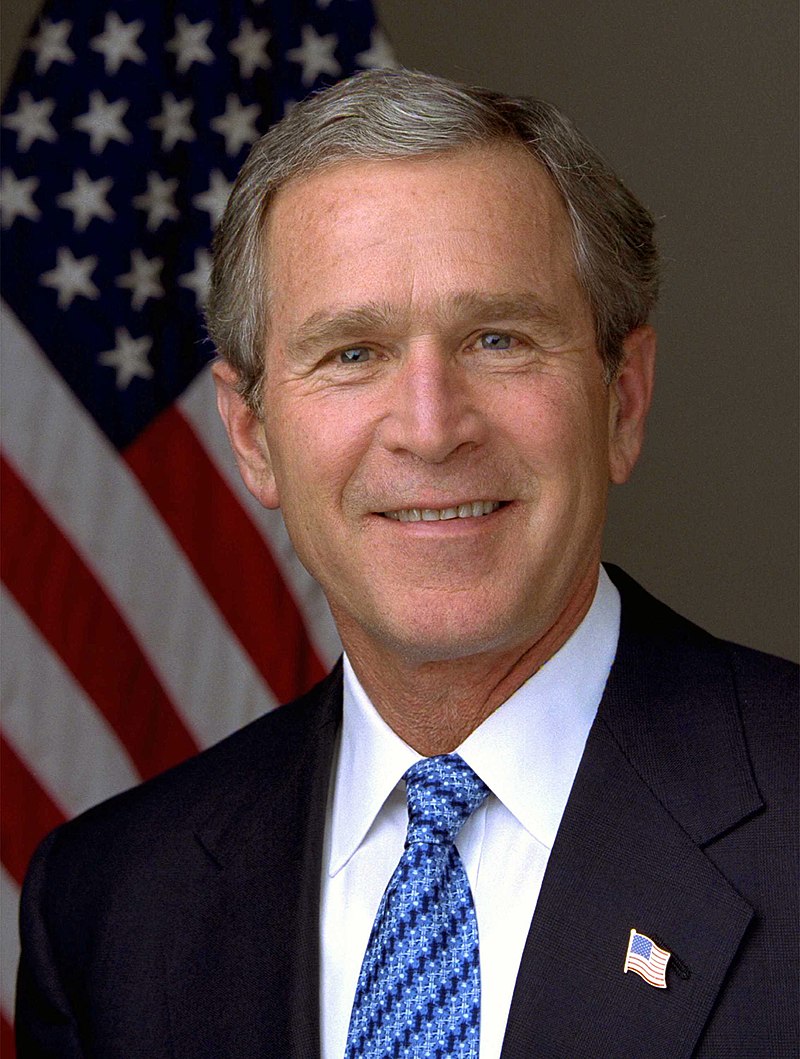
The fact that he was a poor choice brings us to the second name. George W. Bush appointed Hamilton as vice chair. Be advised that the Bush family and oil go back a ways. In the aftermath of WWII, there were those who thought that America’s primary source of power should be atomic. Indeed, Lewis Strauss, former chairman of the atomic Energy Commission, famously predicted that atomic energy would one day make electricity “too cheap to meter.” In 1952, Prescott Bush was elected to the US Senate. 46 He was quickly appointed to the Joint Congressional Committee on Atomic Energy. 47 In 1953, George Herbert Walker Bush co-founded Zapata Petroleum. 48 Looks like George Herbert Walker knew that oil was going to play a big part in the future. Then, of course, he ordered Operation Desert Storm when Saddam Hussein invaded Kuwait. And, of course, a dozen years later his son George Walker Bush had Hussein removed from power. Divisive influence problem solved!
CONCLUSION
The conclusion is that the American taxpayer willingly foots the tax bill for maintaining a military presence in the Middle East for the privilege of paying more to heat and cool the home as well as more at the pump. How disgusting that those in the Middle East who purportedly most want this military presence removed have neglected to make this known to the American public.
_____________________________________________________________________________________________________________________________________________________________________________________________________________________________________________