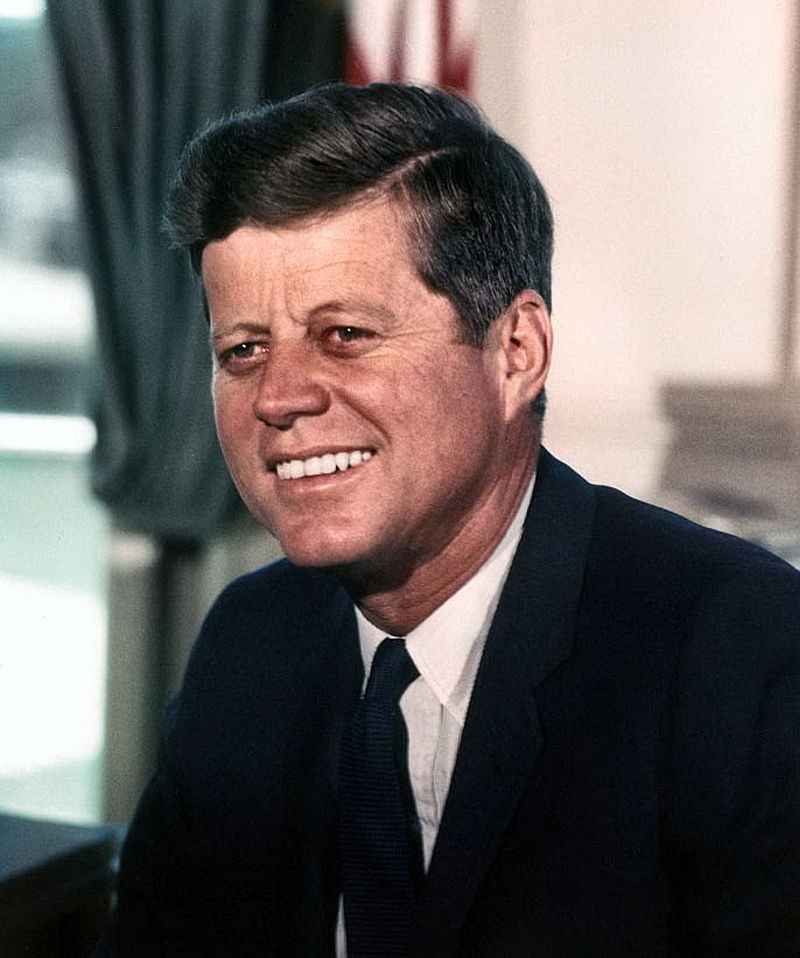
"President Kennedy never foresaw that the chickens would come home to roost so soon..."
Malcolm X, (December 1, 1963)
"I now fully realize that only the powers of the Presidency will reveal the secrets of my brother's death."
RFK, after the Warren Report was issued, after Garrison's prosecution of Clay Shaw was initiaited, and twodays before he, too, was assassinated.
______________________________________________________________________________________________________________________________________________________________
______________________________________________________________________________________________________________________________________________________________
This site presents the kernel – and only the kernel - of the JFK assassination. It has three features to recommend it. One feature is that it explains how Rose Cheramie’s perfectly timed but seemingly completely illogical narrative makes perfect sense. The second is that it explains how Oswald did fire three shots from the sixth-floor window of the school book depository and was nevertheless “just a patsy,” as he maintained publicly and prominently. Finally, it demonstrates the motive for the Warren Commission’s obviously defective conclusion in its obviously defective report.
The starting point for solving the JFK assassination is the motive. The passage of time has only made what the motive was more obvious. It is certain that JFK was pro-labor, and there can be no doubt that as President, JFK acted in a manner favorable to the working man. On May 5, 1961, signed a minimum wage bill that raised the minimum wage a now-seemingly paltry twenty-five cents per hour. The increase, although now seemingly paltry, was substantial due to the fact that the minimum wage prior at that point was one dollar per hour. In other words, it was a twenty-five percent increase. It was estimated that the minimum wage measure would result in a pay increase for approximately three million workers. The law also extended the application of minimum wage requirements to approximately three and one-half million employees previously not covered, and provided over one-half million of them with eventual raises. The enactment of the minimum wage measure was recognized as a triumph for JFK. The House of Representatives is reported to have initially balked at his major recommendations, yielding only after the Senate passed a bill closely tailored to the pattern provided by JFK. JFK noted at the signing that $1.25 was “a very minimum wage” and that the new law was the first extension of coverage since the law first went on the books in 1938. Most importantly, he stated that while signing the bill gave him great satisfaction, it did not finish the job. He predicted greater gains in the months and years to come. 1
On January 17, 1962, JFK took what should have been a giant step in the direction of “greater gains” by circumventing Congress and signing into effect Federal Executive Order 10988. Under the terms of this order, federal employees were given the right to bargain collectively. The theory behind collective bargaining is that with it comes an increase in bargaining power. Reduced to the essentials of employment life in America, in the event of a work stoppage a group of employees is more difficult to replace than a single employee. The increase in bargaining power typically results in a higher wage, and it was clear that federal employees would soon be earning higher wages as a result of JFK’s order. Private employers would thus be required to raise their wages in order to compete for employees.
These two measures taken within the first year of JFK’s tenure as president represented serious gains for the worker, as well as corresponding losses to employers in a very short time. The promise of greater gains in the months and years to come also promised correspondingly greater losses for employers in the months and years to come. Bear in mind that pro-bourgeoisie forces were looking at the possibility of twenty-four years of Kennedy – that’s John, Robert, and Edward - and if the last twenty-one were anything like the first three (almost), the distribution of wealth in the U.S. would be a bit different than what the wealthy were accustomed to. Anybody who is familiar with the history of labor relations in the United States understands that this is already a good candidate for the motive behind the JFK assassination.
Everything said so far pales by comparison to the Kennedy position on the Taft-Hartley amendments to the National Labor Relations Act. Passed in 1947, with approximately 300,000 white male workers who died fighting for their country not yet cold in their graves, support for the amendments was strong enough for Congress to override Harry Truman’s veto by well over the required two thirds majority, and JFK was one of only twenty five senators to vote against it. (He did so twice.) The key feature of the Taft-Hartley amendments is the general proscription of the secondary boycott. 2 An example should suffice to demonstrate the concept. Suppose the employees at a factory of a certain manufacturer engage in a strike. Under the National Labor Relations Act, the manufacturer is entitled to replace the striking employees with other workers (replacement workers) in order to attempt to continue his manufacturing operations. The replacement of the striking employees would of course be futile if the manufacturer were unable either to obtain the raw materials needed to manufacture his product or to ship the finished product to retail outlets. To prevent exactly this situation, the workers at the plant producing the raw material are generally prohibited from striking with the purpose of inducing their employer to cease doing business with the manufacturer, and employees in the transportation industry are prohibited from either refusing to transport the necessary raw materials to the manufacturer or refusing to transport the finished product from the manufacturer to its sales outlets.
There are less economically severe forms of the secondary boycott. Suppose, for example, that a fruit packing union strikes a fruit packing company. As part of the strike strategy, the striking fruit packers picket a sales outlet for products packed by the struck fruit packing company. The picketers do not intend to cause and do not in fact cause the employees transporting the struck goods to refuse to deliver them to the outlet, and the picketers do not intend to cause and do not in fact cause the employees of the retail outlet to engage in a work stoppage with respect to their employer. Nor to the picketers urge any prospective consumer to purchase from a vendor other than the sales outlet for the struck fruit. The sole purpose of the picketers in this situation is to urge the consumer not to buy the struck fruit.
This less severe form was the situation confronting SCOTUS in Labor Board v. Fruit Packers. 3 The Fruit Packers court held that Peaceful secondary picketing of retail stores directed solely at appealing to consumers to refrain from buying the primary employer's product is not prohibited by the Taft-Hartley amendments. In so holding, it devoted approximately two pages of its opinion to comments made by JFK . 4 The Fruit Packers case speaks volumes regarding how the conservative element of the establishment wished the Kennedys to be perceived with regard to the secondary boycott. It is difficult to view the Fruit Packers court’s claim that it looks to the comments of the sponsors of a law to determine the intent of the legislature that passed the law while at the same time devoting two pages of its opinion to the comments of JFK when he was not a sponsor as anything other than an attempt to portray the Kennedy stance on the secondary boycott as less favorable to the worker than that of itself and Congress. Given the timing of the decision, it is easy to conclude that its purpose was to obscure it as a motive for the assassination.
Even though the original National Labor Relations Act of 1935 did not prohibit the secondary boycott, the Congressional antipathy toward the secondary boycott was clearly demonstrated very early on. The economic utility of transportation by over-the-road trucks was increased by the advent of the pneumatic tire and the construction of a paved highway system. The Teamsters, then under the leadership of Dan Tobin, were successful in organizing most of the trucking industry extant by 1935. The basic organizational structure of the Teamsters union consisted of a national governing body (the International), complete with its own officers and treasury, which granted charters to subsidiary local Teamster unions (Locals), also complete with their own officers and treasury. During the mid-twenties and early-to-mid thirties, the local unions enjoyed a substantial amount of autonomy. When the wills of the International and a Local clashed, the ultimate sanction that the International could impose was the revocation of the Local’s Teamster charter. This sanction was only ever meted out to a Local that engaged in a secondary boycott, even though the secondary boycott had yet to become prohibited by law. 5
In 1935, Congress enacted the Motor Carrier Act (MCA). The MCA looks a lot like a reward to the Teamsters bestowed in return for refraining from engaging in secondary boycotts. The MCA contained a statement of its purpose – namely, to eliminate wasteful and destructive competition.6 The act followed closely upon the heels of the depression, and there were a myriad of potential transporters who would have been in a position to compete in the industry. The act effectively decreased the supply of transportation relative to fixed demand, and no doubt had the economic effect of increasing the cost of transportation, and thus of the transported commodity, which was presumably passed on to the consumer. As a result, the MCA was an economic boon to those trucking firms (and its employees) that managed to pass ICC muster, and an economic burden to the average consumer. This was a sacrifice Congress was willing to make to insure against the threat of a secondary boycott.
With regard to the constitutionality of the Taft-Hartley Amendments’ proscription of the secondary boycott, SCOTUS has never been confronted with the argument contained in https://odiousness.com/Articles/FreedomOfAssembly.html . That site begins with analysis of the freedom of speech, and then applies the absolute nature of the amendment’s guarantee to the right of the people to peacefully assemble. Now consider the following scenario. Jimmy Hoffa, President of the Teamsters during JFK’s tenure as President of the U.S., was seemingly at loggerheads with JFK during the entirety of JFK’s tenure. This means that the Kennedys could distance themselves from any act undertaken by Hoffa. Suppose Hoffa had implemented a secondary boycott, and challenged the right of a court to grant an injunction against it on the grounds that the proscription against the secondary boycott was unconstitutional. By 1963, JFK had appointed two Justices – Byron “Whizzer” White” and Arthur Goldberg. Moreover, Justice Hugo Black had already publicly opined that the first amendment was an absolute. Hoffa would have thus been looking pretty good for three votes. Moreover, the longer he waited to implement a secondary boycott while a Kennedy was still president, the more Justices a Kennedy could have appointed. The future of the ban against the secondary boycott was thus in serious doubt. Furthermore, since he was seemingly at loggerheads with Hoffa, JFK had no downside with regard to the conservative element of the establishment. Anybody even moderately familiar with the history of labor relations in the U.S. understands that this is the mother of all motives on steroids for the assassination. Now fast forward twenty years or so. Not only is JFK dead, but so are RFK and Jimmy Hoffa. When their three murders are considered in conjunction with their relationship to the secondary boycott as well as the extent of bourgeoisie anti-secondary-boycott animus, it is difficult to regard them as coincidental.
It was stated earlier that the passage of time has made the motive obvious. It was also stated that the potential for secondary boycotts – be they legal or no – was easily the most compelling motive for the assassination. Given that JFK opposed proscribing the secondary boycott twice, SCOTUS’s antics in the Fruit Packers case reek of cover up. Most telling, however, is that nobody has mentioned the potential for secondary boycotts as even a possible motive. Its compelling nature in the first instance combined with JFK’s pro-labor policies, the Fruit Packers case, and the highly coincidental deaths of JFK, RFK, and JRH render this silence deafening.
Before any discussion of who the assassins were (members of the Pontchartrain Eleven) and who the assassins were not (Lee Harvey Oswald), it is necessary to backtrack to the 1960 presidential election. In order to do that, it is necessary to backtrack even further, all the way the aftermath of WWII. At that point in time, Harry Truman, a Democrat, was President. He subsequently was re-elected in the 1948 presidential election. Dwight Eisenhower, at that point in time also a Democrat, was enormously popular as a result of the extremely competent manner in which he directed the allied war effort in the European theater of operations. "Ike" defected from the Democratic Party and became a Republican. Presumably one of the reasons for Ike's switch was Truman's admonishment for him to stay out of politics like a military man should. 7 Thus, the Democrats lost the services of easily the most electable man in America to the Republicans.

In 1948, Richard Nixon was elected as a delegate to the House of Representatives by his constituents in California, and became a member of the House Un-American Activities Committee (HUAC). Edward Hebert, a former newspaper editor from New Orleans, was also a member of the committee. Nixon achieved a great deal of publicity from his role in the committee's investigation of Alger Hiss, who was accused by Whitaker Chambers, an assistant editor with Time magazine, of being a Communist. History has vindicated Hiss, at least as far as the accusation of being a Communist is concerned, but in 1948 Hiss could not have acted guiltier had he tried. In any event, the Hiss-Chambers affair garnered some six months of headlines and anti-Communist hysteria became part of American heritage. Nixon figured prominently in this publicity.
Ike, with Nixon as his Vice President, was elected President in 1952. He was again elected in 1956, again with Nixon as his running mate. During the eight years of Ike's tenure as president, the activities of the anti-Communists fell into extreme public disfavor. Probably the most infamous of these anti-Communists was Joseph (not Eugene, the Democratic candidate who ran for the Democratic nomination and lost in 1968) McCarthy, a senator from Minnesota. The disfavor was so extreme that the activity of the anti-Communists, which acquired the moniker McCarthyism, was equated with witch hunting.
Nixon was Ike's heir apparent. However, because McCarthyism had fallen into such disfavor with the American public, and because Communist hunting was how Nixon "made his bones," Nixon had an image problem. One way to polish his image was to demonstrate that the zealousness with which Nixon conducted his anti-Communist affairs was justified. The reader should initially note that the Soviets had already made the average American uneasy with the launch of Sputnik in October of 1957. By all accounts, this event undermined the sense of American superiority with regard to rocket and missile technology. With this uneasiness already in the background, communism began to emerge as increasingly threatening. Three instances will be digested here, and not in chronological order. The first is the increase in communist activity in what was then South Viet Nam. In January of 1960, communist forces invaded some districts in the Mekong delta. Land was taken from the rich and given to the poor. While the communist control in these districts was temporary, the invasion is sometimes referred to as the start of the Viet Nam War (Tonkin Resolution notwithstanding).
The specter of communism also "reared its ugly head" with the "defection" of Lee Harvey Oswald. Oswald was a former Marine who was a radio operator at an airbase used by U2 planes. On November 16, 1959, an article appeared in the Fort Worth newspaper reporting that Oswald was attempting to defect. On that same day, he was visited by Priscilla Smith, a former assistant to the then-Senator JFK. An article resulting from her interview then appeared in the Boston Globe. That article also described Oswald's purported attempt to defect. On May 1, 1960, Gary Francis Powers was flying a mission over the Soviet Union was he was allegedly shot down. There will, of course, be much more about Lee Harvey Oswald infra. Suffice it to say for now that he was repatriated in June of 1962 with surprisingly little fuss. Moreover, he was subsequently able to procure employment with Jaggars-Stiles-Stovall, a printing firm located in Dallas, Texas. This firm had a contract with the United States Army to set the typescript for its maps, and the firm's employees who performed related functions, one of which was not Oswald, needed security clearance.
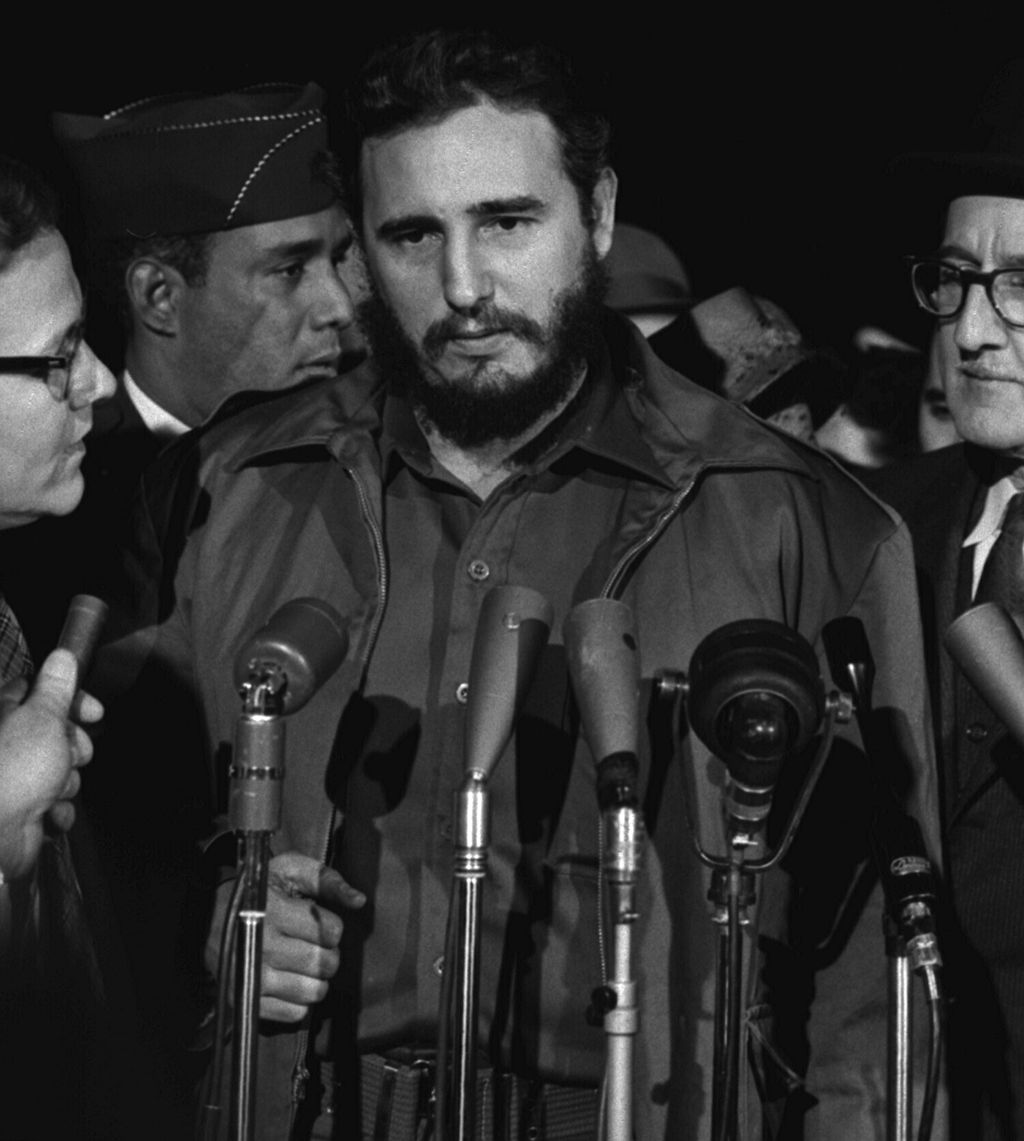
The specter of communism appeared right on our own doorstep in Cuba with Castro's overthrow of the Batista (aka "the man") regime on January 1, 1959. Castro was the son of a wealthy former peasant who acquired his wealth by harvesting sugar on land leased from the United Fruit Company and using the proceeds of the sugar crop to purchase land.8 He financed Fidel's education by the Jesuits, where he attended class with those who would subsequently be his closest Revolutionary companions. 9 Castro was not a communist during his youngest years, and his purported conversion to communism was a very quiet one. 10 Prior to the revolution, the Ortodoxos is the only political party to which Castro ever belonged. 11 Cuban Communists didn't initially embrace Castroism, and in fact backed Batista until well after Castro's coup was successfully completed.12 Although some reports in the American media described Castro and his new regime as communist both during the process of and after his coup,13 he did not publicly announce that he was communist until 1961. Indeed, prior to that point, Castro accused the United States of decreeing the destruction of his revolutionary government on the pretext that it was Communist dominated.14 Reports that Castro was Communist appear to have originated from Democrats.15 Nixon claims that in April of 1959 he wrote a confidential memorandum for distribution to the CIA, the State Department, and the White House stating that Castro was "either incredibly naive about Communism or under Communist discipline" and should be treated accordingly.16 During JFK's campaign for President, Castro described him as an "illiterate and ignorant millionaire." 17 The absence of Communists in the Cuban Council of Ministers at the end of 1960 was total. 18
Some basic bottom-line facts about the revolution are the following. There is at least nearly universal, and maybe universal, agreement that conditions in Cuba were not ripe for revolution. 19 Most historical accounts state that Castro accomplished his coup with fewer than a thousand men. One account states fifteen hundred. After Castro's coup, the United States imposed an embargo on American exports to Cuba, excepting only food and medicine. With the exception of sugar, no embargo was placed on goods imported from Cuba to America. Among the Cuban goods not subject to the import embargo was tobacco. Neither air nor sea transport between the United States and Cuba was prohibited. 20
The big loser of the Revolution was the United Fruit Company. A "Boston based corporate giant," it owned very substantial interests in Cuba, as well as many other locations in Latin America. A succession of disruptions in Latin America that began during the Eisenhower administration resulted in considerable loss to the company. These and other economic difficulties of the United Fruit Company during the 1950s look a lot like Boston's punishment for its Representative's opposition to the Taft-Hartley Amendment. 21 United Fruit has been described as having been the dominant political force in Cuba. Until 1959, it was untouchable - no labor problems, no excessive taxation, no interference with the privileges of its rank. 22 In 1959, United Fruit's holdings in Cuba were nationalized. Certainly one big winner of the Revolution was the state of Louisiana, the source of most of the domestic sugar consumed by Americans. Prior to the Revolution, Cuba supplied almost one third of the sugar consumed in the United States. Once the United States stopped importing from Cuba, either the cost of sugar rose from a reduced supply measured against a constant demand, or the cost of sugar rose from the increased cost of replacing the sugar formerly imported from Cuba. Either way, Louisiana's GNP significantly increased as a result of the Revolution. It is interesting to note the loss to the United Fruit Company (headquartered in Boston at that point) vis-a-vis the gain of the state of Louisiana when it is remembered that JFK voted in pro-labor fashion against the Taft-Hartley amendments to the National Labor Relations Act while Edward Hebert sat in anti-labor fashion on HUAC. Assuming no coincidence, it is clear that the Mafia, assuming one even exists, could not bring about that situation.Moreover, the situation in Cuba placed JFK in an interesting position. The ambivalence of Castro with respect to Communism meant that he could go either way on the issue. If JFK opposed invasion, then Castro might announce that he was a Communist, and JFK would appear soft on communism. If JFK favored invasion, then Castro could repudiate any allegation that he was a Communist, and JFK would be accused of risking American lives for the economic benefit of his homeboys, the United Fruit Company. Thus, it should come as no surprise that what to do about Cuba was a major issue in the 1960 presidential election. Given that the media had effectively linked Castro with communism, Nixon might have seemed initially more qualified than JFK on this issue by virtue of how he rose to public prominence. However, during the fourth debate between the two candidates, JFK urged that Cuba be invaded, and Nixon disagreed. Thus, the anti-Communist "heavy" emerged from the debate as being the softer of the two candidates with regard to the Communist "menace." JFK won the election. 23
The political problem with Cuba did not disappear as a result of JFK's election victory. In April of 1961, JFK permitted an attempted invasion of Cuba by Cuban exiles under the auspices of the CIA. From a military standpoint, the invasion was a disaster. The conservative element of the establishment assigned the blame to JFK. Excepting only under the general principle of respondeat superior, it is difficult to see how JFK should have incurred this blame. On April 4, 1961, he authorized the invasion of Cuba by exiles armed by the United States, apparently complete with one air strike by American planes flown by exiled pilots claiming to be defectors from Castro's Cuba. On April 11, JFK stated at a press conference that he would not undertake, "under any condition, an intervention in Cuba by the United States armed forces." 24 On April 13, Allen Dulles urged JFK to proceed with the invasion, and assured him of success.25 The operation, of course failed. When its failure first appeared imminent, JFK was asked to authorize a second air strike, one that could not be explained by the "defecting Cuban" cover. JFK refused to do so. His refusal constitutes the basis for levying the blame upon him. Sixteen years later, James Wilcot testified before the HSCA that "[t]he theme was always the same: get something started to overtly call in the military and follow up with complete seizure and installation of a favorable government." 26 This statement not only reveals that JFK was not to blame for the Bay of Pigs fiasco, but also openly reveals the existence of a problem the CIA had with JFK, regardless of its source.
In early 1962, a book written by Richard Nixon entitled Six Crises was published. Somehow the 1960 Presidential election campaign rose to the level of a crisis, and Nixon utilizes over one hundred-fifty pages to describe it from his perspective. In this chapter, Nixon describes the sequence of events that led him "[f]or the first and only time in the campaign [to get] mad at Kennedy - personally." 27 He related that on October 20, 1960, newspapers reported that JFK was advocating direct intervention in Cuba in the form of U. S. assistance to Cuban anti-Castro forces both in exile and in Cuba. Although Nixon alleged that Kennedy's proposed course of action would be violative of U. S. treaties with other Latin American countries, Nixon wrote that pursuant to his recommendation the CIA had been providing arms, ammunition, and training to Cubans exiled both in America and other Latin American countries since early in 1960. 28 The alleged program was covert and its alleged existence classified. 29 Nixon also wrote that Fred Seaton said that "the White House" said that Allan Dulles said that JFK was briefed on Cuba by CIA representatives on July 23, 1960, and further that JFK had been informed during the briefing of the fact that Cuban exiles were being trained for the eventual purpose of supporting an invasion of Cuba. 30 Newspaper reports regarding that briefing confirm that it occurred, that it was a "nothing withheld rundown" of the two then-current hotspots, Cuba and the Congo. 31 According to Nixon, because the covert nature of the program had to be protected at all costs, he was forced into the position of attacking JFK's suggestion as wrong and irresponsible, 32 and that this increased his "rage." 33 When Nixon's book appeared in print in 1962 (the copyright was registered on March 29, 1962), the White House issued a statement denying that JFK had ever been informed of any United States operation pertaining to Cuba during the two hour and fifteen minute briefing. 34Without regard to the relative character of the two individuals (and Nixon cannot possibly win that one), there are three very good reasons to believe that JFK's denial was truthful. First and foremost of these reasons is that Nixon responded to JFK's position by attacking it as wrong and irresponsible. His response, if taken at face value, demonstrates that no government program to arm and train Cuban exiles even existed. Nixon's explanation for attacking JFK's position was his perception of the necessity to protect the covert nature of the program at all costs. Given this explanation, it is difficult to see why he later would add to the extent of the exposure of the program's existence by writing about it in his book, especially since its existence violated both federal and international law. The second good reason to believe that JFK's denial was truthful is that JFK did not need to know at that point in time when he was allegedly briefed. On July 23, 1960 (the date of the briefing), it was far from certain that JFK was going to win the Presidential election. At that time, he had no authority whatsoever by which even to influence Ike's foreign policy, far less implement one himself. If Nixon's allegation that JFK had been briefed was true, then the CIA divulged classified information to somebody who, had he lost the election, would never have needed to know, and who, until he won the election, couldn't have done anything about it anyway. Another reason to believe that JFK's denial was truthful is that his advocacy of using exiles to invade is easily explained by means other than knowledge of the alleged existence of a covert operation to arm and train them. That the resistance of the Batista regime was overcome by at most 1500 revolutionaries in a country where conditions were not ripe for revolution is simply incredible. It took America two wars and the threat of a third before an island relinquished its attempt to rule a continent. The southern states had roughly half the government and half the militia behind its attempt to revolt and still failed. By advocating the use of exiles for invasion purpose, JFK could easily have been merely underscoring the incredulity of the impeccably timed success of Castro's revolution. The rather pitiful failure of the Bay of Pigs operation only served to further underscore it.
The so-called liberal press contributed heavily to the political problem presented by Cuba, especially Lucepress. Henry Robinson Luce has been described as having been "Lord High Admiral of the free world's greatest fleet of publications." 35 Among his publications were Time, Life, and Fortune. After the abortive Bay of Pigs incident, Luce's publications began advocating another invasion of Cuba. Fortune magazine, departing from its usual financial fare, ran a long article supporting the CIA and its role in the Bay of Pigs incident and placed the blame for the failure squarely on JFK. 36 The article quoted Luce's wife, Clare Booth Luce, who was formerly the ambassador to Italy, as saying that Cuba was an issue "not only of American prestige but of American survival." 37 In 1963, Life magazine began a one magazine campaign to garner public support for the paramilitary adventures of the Cuban exiles. 38 The Luces accepted an invitation to lunch at the White House, and were reportedly asked by JFK to tone down their coverage of the exiles. 39 The conversation reportedly became heated, and the Luces left without first eating their desert. 40
The foregoing should suffice to demonstrate that Cuba presented JFK with one major problem. A second major political problem of JFK's pertained to the Civil Rights movement. From a purely political standpoint, civil unrest is generally unwelcome by the administration under which it occurs. The public often blames the officials currently in power, even if the unrest was not occasioned by any act of the official. The problem was even more acute with regard to the Civil Rights movement. From a purely political standpoint, the activities of Martin Luther King, Jr. (MLK) put JFK in a no-win situation. If he intervened on MLK's behalf, JFK would lose the support of most or all who viewed blacks unfavorably. If he didn't intervene on MLK's behalf, he would lose the support of those whites who were sympathetic to the black cause. Moreover, it was clear that JFK was not going to win the support of black America in any event due to the fact that JFK was pro labor. His opposition to the Taft-Hartley Amendments, his increase of the minimum wage, and his issuance of Federal Executive Order 10988 demonstrate this fact beyond peradventure. MLK was not pro-labor. Black America, for whatever reason, has consistently refused to regard its problems as a matter of economic class rather than as a matter of race, and thus has historically excused itself from any mass participation in any mass effort to win economic accommodations via conflict with the American bourgeois. It has, however, participated in mass efforts to undermine the labor movement. 41
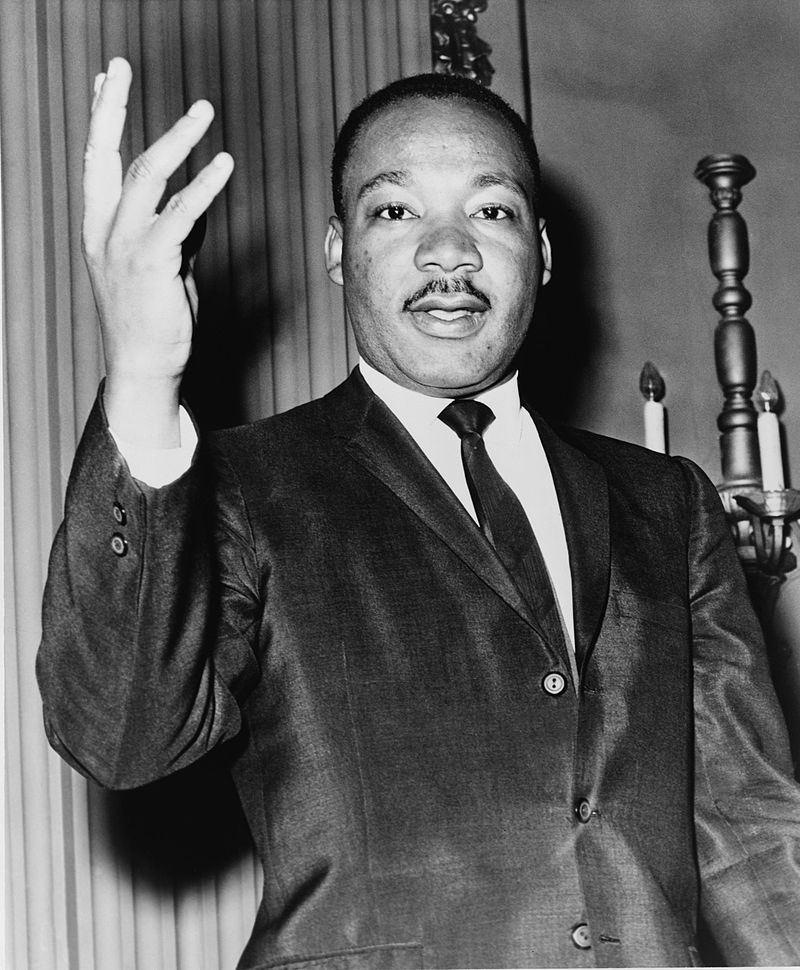
Even given these considerations, JFK did the right thing with regard to integration. He did so notwithstanding that even within his administration, only he and his brother wanted to side with Black America. 42 On the eve of George Wallace's capitulation to the Justice Department (headed by Robert Francis Kennedy) at the University of Alabama, JFK promised that he would ask Congress "to make a commitment ...to the proposition that race has no place in American life or law." 43 When he made good on his promise, there were those who predictably objected because they disliked Black America. There were also (predictably) objections from those within the Civil Rights Movement who felt that the proposed legislation did not go far enough, notwithstanding that it was by far the most comprehensive bill ever to receive consideration by Congress. 44 More politically damagingly, once JFK sided with MLK, J. Edgar Hoover redoubled his determination to discredit the Civil Rights Movement. 45 Part of this discrediting process was the statement by Assistant Director William C. Sullivan, "We must mark [King] now ...as the most dangerous Negro ...in this nation from the standpoint of communism ...."46 Accusations of sexual impropriety began to appear, 47 apparently with white women as well as black. 48 FBI surveillance recordings contain a moan from a gathering of mixed male and female company of MLK. 49 It would seem that either some inappropriate sexual behavior occurred, or - infinitely more likely - MLK was aware of the surveillance and deliberately invited unpopularity so as to undermine JFK. Note that the fact that MLK never backed RFK in RFK's run for President - even after all the Kennedys did for Black America, indicates that the second possibility is indeed the correct one. 50
In 1963, MLK journeyed to Birmingham where he implemented his program of civil disobedience, and was jailed for doing so. While he was incarcerated, he became aware that the local clergy had issued a statement calling his activities there "unwise and untimely." He responded with his now famous "Letter from Birmingham Jail," in which he defended his activity. The following is an excerpt from that letter, dated April 16, 1963:
One of the basic points in your statement is that the action I and my associates have taken in Birmingham is untimely. Some have asked, "Why didn't you give the new city administration time to act?" The only answer that I can give to this query is that the new Birmingham administration must be prodded about as much as the outgoing one before it will act. We are sadly mistaken if we feel that the election of Albert Boutwell as mayor will bring the millennium to Birmingham. While Mr. Boutwell is a much more gentle person than Mr. Conner, they are both segregationists, dedicated to the maintenance of the status quo. I have hope that Mr. Boutwell will be reasonable enough to see the futility of massive resistance to desegregation. But he will not see this without pressure from devotees of civil rights. My friends, I must say to you that we have not made a single gain in civil rights without determined legal and nonviolent pressure. Lamentably, it is an historical fact that privileged groups seldom give up their privileges voluntarily. Individuals may see the moral light and voluntarily give up their unjust posture; but as Reinhold Niebuhr has reminded us, groups tend to be more immoral than individuals. We know through painful experience that freedom is never voluntarily given by the oppressor; it must be demanded by the oppressed. Frankly, I have yet to engage in a direct-action campaign that was well-timed in the view of those who have not suffered unduly from the disease of segregation. For years now I have heard the word "Wait!" It rings in the ear of every Negro with piercing familiarity. This "Wait" has almost always meant "Never." We must come to see, with one of our distinguished jurists, that "justice too long delayed is justice denied."
We have waited more than 340 years for our constitutional and God-given rights....
There is no question that MLK had a valid point. However, there is also no question that the philosophy of relative urgency described in his letter represented a significant departure from the philosophy employed by the black leadership in the areas of both employment and school desegregation. 51 It is certainly not unreasonable to believe that one objective of MLK was to create a second domestic political problem for the Kennedy administration.
The facts contained in this paragraph are not in dispute. On July 31, 1963, the FBI conducted a raid of the residence of William Julius McLaney, located just North of Lake Pontchartrain, Louisiana. They seized more than a ton of dynamite as well as other bomb making materials. The munitions were purportedly for the purpose of carrying out a military operation against Cuba, with which the U.S. was at peace. Eleven men were detained, most of whom were Cuban exiles. Notwithstanding the fact that the bomb cache was a very clear violation of the neutrality Act, no criminal charges were ever filed against the Pontchartrain Eleven. The raid received substantial publicity, and not only locally. 52 In other words, the Kennedys – both President John and Attorney General Robert - must have known about it. Thus, the decision not to file must have come from them.
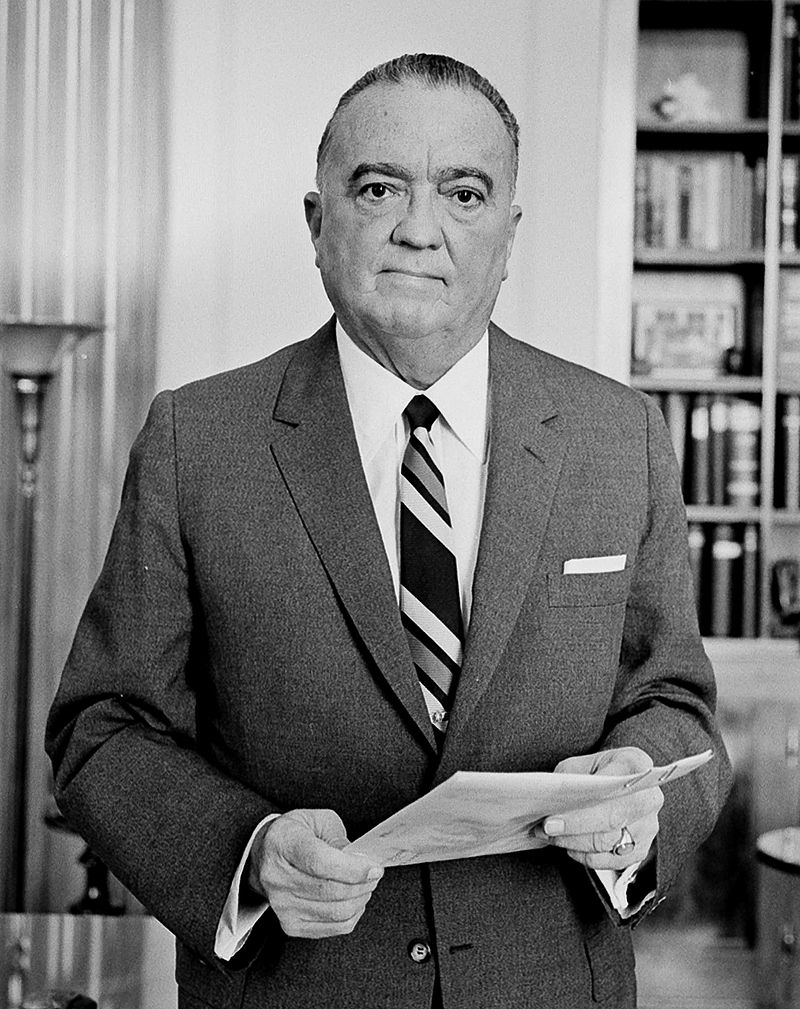
There may be a dispute about why the raid occurred, but there shouldn’t be. Jim Garrison, who prosecuted Clay Shaw for conspiracy to murder JFK, stated, “The FBI raid had come in response to pressure from President Kennedy, who wanted the Bureau to stop the CIA’s unending violations of the Neutrality Act.” 53This is false. On March 17, 1963, an exiled anti-Castro Cuban group that called themselves Alpha 66 attacked a Soviet freighter while it was anchored in a Cuban harbor. 54 The Kennedy administration condemned the attack strongly. Notwithstanding this condemnation, no arrests were ordered. Instead, “Prevention of Departure” notices were issued to the offending Cubans, in which the Cubans were informed that if they left Dade County, Florida their immigration status would be in jeopardy. 55 However, various sources report that there is no record in any primary source that JFK ordered the FBI to make the arrests. These latter sources are most likely correct, since at least on the surface, it seems unlikely that the Kennedys would order the raids and then not charge anybody for the Neutrality Act violations. If this is correct, then the raid was the responsibility of J. Edgar Hoover, one of JFK’s many political adversaries and rabidly anti-labor. He certainly would have been aware of the potential for any trial to inflict political damage upon the Kennedys, and certainly anticipated that no charges would be filed, especially since no criminal prosecutions resulted from Alpha 66’s attack on the Soviet freighter in Cuban waters. It follows that Garrison’s assertion that the raid was in response to pressure from JFK was an attempt to whitewash Hoover. Or maybe we can look forward to the release of some super-duper, top secret, classified document containing an order from JFK directing Hoover to make the raids. In any event, it is safe to regard the Kennedys as reluctant to try those detained as a result of the raid.
This assertion is bolstered by the following. Dr. Orlando Bosch participated in the Cuban Revolution on behalf of Castro. He subsequently turned against Castro, was exiled to the U.S., and became head of Insurrectional Movement for the Recovery of the Revolution (MIRR). In 1963, Bosch purportedly rebelled against his CIA handlers, and published a pamphlet entitled The Tragedy of Cuba, in which he charged the Kennedy Administration of betraying the cause of the Cuban exiles. Bosch sent one pamphlet to JFK. 56 While it is unlikely that the Kennedys needed the pamphlet in order to acquire one, JFK's receipt of the pamphlet must have confirmed an already existent fairly good idea of what any trial against the anti-Castro Cubans would have looked like in the event that they chose to proceed on criminal charges against the Lake Pontchartrain Eleven. It is thus clear that they were less than enthused about the prospect of having the nature of their administration's dealings with Cuba illuminated at a criminal trial, and were therefore content with merely confiscating the exiles' armaments.
Keeping in mind the Bay of Pigs fiasco and the Cuban Missile Crisis, the decision not to charge anybody despite the flagrant violation of the Neutrality Act is easily perceived as a “duck.” That is to say, the political damage that could have been inflicted on the Kennedys in the event a trail had occurred would have been enormous. Furthermore, there was the possibility of false but believable testimony. Suppose, for example, that a witness for the defense testified that there were no missiles in Cuba until the one merchant ship that was permitted to slip through the naval blockade brought them there, and that the Kennedys had staged the whole crisis as a publicity stunt to rebut the negative publicity from the failure of the Bay of Pigs operation. That’s just one thought. The possibilities would have been endless considering the fact that the witnesses would not necessarily have been constrained by truth.
Now for another extraordinary coincidence. Consider Melba Marcades, much better known as Rose Cheramie. There is no dispute regarding the facts contained in this paragraph. She was a heroin-addicted prostitute with a long criminal history. On November 20, 1963, she was found on November 20, 1963, lying on the road near Eunice, La., bruised and disoriented. 57 She was ultimately taken to the Louisiana State Hospital in Jackson, Louisiana by Lt Francis Fruge of the Louisiana State Police. Dr. Victor Weiss was a psychologist who worked at the hospital. At some point before the assassination, he either overheard Cheramie tell somebody that JFK would be assassinated in Dallas or was told directly by Cheramie that JFK would be assassinated in Dallas. Three days after the assassination, Cheramie was interviewed by Lt. Fruge. On September 4, 1965, near Big Sandy, Texas, Cheramie was killed as a result of her skull having been run over by an automobile. She had been lying in the road. The driver of the car that hit her transported her to the hospital and reported the accident to the police. Even though Left nobody ever found out how Rose Cherami ended up lying on the highway, the case was closed due to lack of evidence and the fact that Cheramie’s relatives did not pursue it further.
Once again, none of the assertions above are a matter of dispute. From here on out, what exactly happened to Cheramie gets quite hazy. For the moment, note that either the Cheramie incident is somehow connected to the assassination, or a coincidence of the highest order is involved. Also note that Cheramie would have had a serious credibility problem had she ever testified in front of a jury to this incident due to her status as a former mental patient and a heroin addicted prostitute, as well as the fact that she was under its influence during the incident she described.
Most of the haziness is the result of the report by the House Select Committee on Assassinations on. Keep in mind that this report was issued on December 29, 1978, thirteen years after Cheramie’s death (September 4, 1965),ten-and-a-half years after RFK’s death (June 6, 1968), and almost ten years after Garrison tried Clay Shaw (March 1, 1969). This report has Cheramie thrown out of the car she was riding in with “two men who were Italians or resembled Italians,” was evicted from the auto while it was moving, was hit by another car (remember she was treated at the hospital in Eunice for minor abrasions), that she knew JFK would be assassinated because that was the “word in the underworld,” that she was going to Dallas with the two men to, number one, pick up some money, pick up her baby, and to kill Kennedy." 58 For whatever reason, Cheramie's allegations were eventually discounted.
If Cheramie had been a Roman Catholic nun, there still would have been a tendency to disregard her story (whatever it was) anyway. Nobody who wants to get away with a murder goes out of their way to tell somebody they’re going to do it, treats them poorly, and then leaves them alive as a witness against them. It makes no sense! Except in this case, there is a scenario under which it would make perfect sense. Remember the Kennedy “duck” with regard to the Pontchartrain Eleven? Ask yourself what a trial against them for assassinating JFK would have looked like. A conviction would have been extremely unlikely due to Chermie’s credibility problems, the apparent unlikeliness of her story on its face, and the fact that many people saw Oswald fire three shots from the window of the book depository. The motive assigned would have to have been Cuba, and all the potential for political embarrassment avoided by the first duck would have existed at the murder trial. MOST IMPORTANTLY, nothing would have been said about JFK’s stance with regard to the secondary boycott.
Because of all of the evidence contained in the Warren Report, this site accepts that Oswald fired three shots from the School Book Depository window as fact. So doing means there are three possibilities. First is that Oswald was the lone assassin, which is the conclusion reached by the Warren Commission. Second is that Oswald was not the lone assassin, but rather part of a conspiracy to assassinate JFK. This is the conclusion reached by the House Select Committee on Assassinations. Third is that the conspirators somehow found out about Oswald's bogus attempt and simply lobbed a real assassination on top of it. This is the conclusion reached here.
What follows are some facts upon which the fake assassination attempt claim is based. Lee Harvey Oswald was 17 years old when he enlisted in the United States Marines. He was ultimately assigned to the U.S. airbase in Atsugi, Japan, which was one of two bases regularly used for U-2 landings and takeoffs. 59 In September of 1959, he received a hardship discharge, and was put on reserve. On October 15, 1959, Oswald crossed the Finland-Soviet border and entered the Soviet Union. 60 On October 31, he attempted to renounce his U.S. citizenship, and promised to disclose to the Soviets the knowledge that he possessed as a radio operator. 61 On November 16, an article appeared in the Fort Worth newspaper detailing the above. 62 He also received a visit from Priscilla Post, a former assistant to then-Senator JFK, and the substance of the above also appeared in the Boston newspapers.63 On May 1, 1960, Gary Frances Powers was reportedly shot down while flying a mission over the Soviet Union. On April 30, 1961, Oswald married Marina Prusakova. Later that year, Oswald began to write letters alleging Soviet persecution of his wife. 64 Oswald also wrote "manuscripts" detailing corrupt practices of Communist party officials and "almost prisonlike" restrictions on travel. 65 On Feb. 1962 Powers was exchanged for Rudolph Abel and returned to the United States. Upon his return, he suggested that Oswald supplied the necessary information for the Soviets to shoot him down. 66 On June 13, 1962, Oswald returned to the United States without the "red tape" that might have been expected under the circumstances. Oswald's activity in the Soviet Union looks a lot like an assist to Richard Nixon by way of establishing the need for somebody experienced in opposing communism. Moreover, his writings that were critical of the Soviet Union are reminiscent of Emma Goldman's My Disillusionment With Russia.
He moved to the Dallas-Fort Worth area in Texas after a brief stay in New Orleans. While in the Dallas-Fort Worth area, Oswald somehow procured employment as a photo print trainee with the Jaggars-Chiles-Stovall, a firm that processed classified photos for the U.S. government. 67 After approximately a six month tenure of employment there, Oswald was fired during the first week of April of 1963. On April 10, 1963, a purported assassination attempt was made on Major General Edwin Walker. George de Mohrenschildt, a prominent "white Russian" with whom Oswald had become acquainted, asked Oswald how he had missed Walker 68
Oswald then went to New Orleans, arriving there on April 25, 1963. 69 While there, he did three things crucial to the theory of the assassination presented by this website. First, on May 26, he wrote V. T. Lee, who was the national director of the Fair play for Cuba organization, requesting permission to rent an office (at Oswald's expense) for the purpose of forming a Fair Play for Cuba branch in New Orleans. Lee's reply was discouraging.70 Second, he passed out Fair Play for Cuba literature, one piece of which had the address of Guy Bannister's private detective office stamped upon it.71 Note that Guy Bannister was a former FBI agent who was a rabid anti-Communist, as well as both a member of the John Birch Society and the Minutemen.72 Third, apparently looking like nothing so much as a cue ball, he appeared in a voter registration line in Clinton, Louisiana, where nearly all the registrants were black. 73 Note that Oswald was arrested by the New Orleans police for a disturbance created while he passed out FPCC literature, and that he appeared on television explaining that he was a Marxist-Leninist.74 Note also that his activity in New Orleans makes it clear that Oswald did not move there to "lay low" in the aftermath of the purported attempt on Walker.
The fact that Oswald was openly accused of the purported attempt on General Walker considered in conjunction with his activities in New Orleans provide the key to what really happened in Dallas. In a nutshell, what really happened is best described by the concept "turnabout is fair play." As has been shown, JFK had two very large political problems - one with Cuba and the other with the unrest resulting from what is now known as the Civil Rights Movement. The activity undertaken by Oswald in New Orleans demonstrates that he was acting on behalf of the Kennedys. By exposing V.T. Lee's lack of enthusiasm, Oswald opened the legitimacy of the FPCC to question. That is to say, he illuminated the possibility of the FPCC being a mere ploy to stir civil unrest under JFK. By passing out FPCC literature with Bannister's address on it, Oswald attempted to create the impression that the real source of the civil unrest occasioned by the activities of the FPCC was an element of the conservative establishment. By associating himself - and thus Bannister and the conservative element of the establishment - with the black voter registration drive, Oswald also attempted to create the impression that the real source of the civil unrest caused by MLK was also an element of the conservative establishment. (And isn't it absolutely astonishing that this theory - which to say the very least is viable - has never appeared in print?) Oswald, who once worked for a Republican commander-in-chief of the armed forces to help communism “rear it’s menacing head” in order to rehabilitate RMN, was working for a democratic commander-in-chief at the time of his death.
What happened at the scene of the assassination demonstrates beyond peradventure that the foregoing is correct. It is an unavoidable fact that Oswald passed up much better shots to kill JFK if, in fact, that was what he was trying to do. Once again, refer to a diagram of the scene. The motorcade traveled north on Houston Street for one block at a speed of somewhere between ten and fifteen miles per hour. During this period, there was virtually no left to right movement of the purported target, and no obstacles to impede what would have been a clear shot. Furthermore, he would not have had to lean out of the depository window and let those present at the plaza see him. This would have been a very easy shot for a former sharpshooter even though he later was downgraded to marksman and four years had elapsed since he was evaluated as that. Now look at the sharp turn off of Houston Street onto Elm Street. JFK would have been very nearly stationary for at least several seconds while his limousine negotiated that very sharp turn. Talk about a sitting duck! And, once again, he would not have had to lean out of the window and let those present see him. Only after the limo had completed its turn and was heading away from the sixth window of the book depository did he lean out of the window so everybody could see him and fired three shots. Governor John Connally testified to the Warren Commission that he heard one shot that didn’t hit him and then got hit in the back. 75 It is exactly one-hundred percent certain that one of the shots missed. We know this because one of the bullets hit the curb near where James Tague was standing and a chipped piece of the concrete which drew blood on Tague’s cheek. Tague said it was the second shot that caused this. 76 Since the Warren Commission concluded that Oswald was the lone assassin, it obviously "deduced" that the shot which Connally Connally heard before he got hit was the same shot that resulted in Tague’s minor wound. If it is not assumed that Oswald was the lone assassin, then it would seem that two shots missed.
Let’s take stock with regard to Oswald. First, Oswald was permitted to re-enter the U.S without any of the red tape that might be expected for somebody who defected, tried to renounce his American citizenship, and married a Russian national. Second, he was accused of attempting to assassinate Major General Edwin Walker. Third, only after he was accused did he leave Dallas for New Orleans. Fourth, he did pass out “Fair Pay for Cuba” literature that had the same address as Guy Bannister on it. Fifth, even though he apparently did not register, he did stand in a voter registration line in Clinton, Louisiana while a drive to register Black voters was in progress. 77 Sixth, if he really wanted to kill JFK, then Oswald did pass up much better shots than the ones he took, both from a concealment point of view and an accuracy point of view. Sixth, Oswald certainly “missed” at least one shot. Seventh, if Tague and Connally are boh correct, then Oswald also “missed” the second shot. The totality of these circumstances permit no conclusion other than that Oswald attempted to associate himself with JFK's political adversaries, faked an attempt on JFK’s life, and intentionally missed all three shots he took.
It remains to explain what various Dallas police officers said that Lee Harvey Oswald said and what his wife Marina did say. The Warren Report detailed the activity surrounding Oswald’s detention as a suspect in the assassination. There are three incredible facts regarding this detention. The first incredible fact is that although he was purportedly interrogated for some twelve hours, no recordings were made of any interrogation sessions. The second incredible fact is that, according to the Warren Report, “In all, more than 25 different persons participated in or were present at some time during interrogations.” The third incredible fact is that Oswald was killed while he was in police custody. That any of these facts should occur in a case of such magnitude invites inquiry into the propriety of the conduct of the involved officials. That all three did occur demands it.
The rather obvious purpose of recording statements made by either witnesses or suspects is to reduce the possibility of any subsequent dispute as to what the subject said in the statement. In a typical case, the statements of a suspect are recorded. In the typical case where the statement is recorded, the person who gives the statement can attack it only by asserting that the voice on the tape is not his or that he was under duress when he gave it. If the statement is videotaped, he must rely upon duress. In a case of the magnitude as the one against Oswald, it would seem that the police would go the extra mile to ensure at least the appearance of having all their “i”s dotted and their “t”s crossed. The failure of the authorities to do so in Oswald’s case suggests the possibility that they preferred their version of what Oswald said to what Oswald actually said.
The Commission recognized that, in general, a large number of people present in an interrogation room reduces the chances of gaining the confidence of any suspect, and thus of procuring a truthful statement. In Oswald’s case, the Dallas Chief of Police admitted that “we were violating every principle of interrogation.” It thus becomes incumbent to determine why a well-known and widely accepted principle of interrogation was knowingly violated in what could without exaggeration be termed “the case of the century.” An answer that immediately suggests itself is that it is much more difficult to call 25 people liars than it is to call one or two people liars. While this explanation may not be the only possible one, it does comport fully with the possibility presented by the authorities’ failure to record their interrogations of Oswald.
Due to the absence of any recordings whatsoever of Oswald’s interrogation, Oswald’s death left the 25 people who witnessed parts of the interrogation as the only sources of what was said during them. Since this was one effect of his death, it is least theoretically possible that it was one motive for his murder. When considered with the facts that the purpose of recording interrogations is to minimize the possibility of subsequent dispute, that Oswald’s interrogation wasn’t recorded, that having 25 people involved in the interrogation process “[violates] every principle of interrogation,” and that 25 people were involved in Oswald’s interrogation, this possibility can hardly be termed “remote.” Earl Warren was certainly familiar with the concept of a swearing contest. To put it bluntly, it is far more likely that 25 people – all cops – lied than it is that the authorities simply overlooked the benefits of recording the interrogation, unwittingly engaged in an interrogation process in violation of every principle of interrogation, and were merely negligent in permitting the defendant of the century to himself be assassinated. This likelihood is further increased by the purported motive of Oswald’s assassin – to spare JFK’s widow the ordeal of a trial. When the facts that the police are a creation of the bourgeoisie for the purpose of protecting bourgeoisie interests, that the police have always acted in a manner consistent with the purpose of their creation, and that the salary paid the average police officer rose an extraordinary thirty-eight percent between 1964 and 1969 are considered with the irregularities of Oswald’s interrogation, any doubt should be removed.
The content of Oswald’s purported statements, while superficially consistent with regard to Oswald’s public claims of innocence, are extremely incriminating. Oswald’s interrogators claimed that Oswald denied owning the Mannlicher allegedly used to assassinate JFK. They claimed further that when Oswald was confronted with a picture of him holding a rifle and carrying a pistol, Oswald stated that a picture of his head was superimposed upon the body of someone else with a rifle and a pistol. Oswald is reported to have further stated that because of his experience in the area of photography, he would be able to demonstrate that the photograph was not authentic. When asked why he left the Book Depository immediately after the assassination, Oswald is reported to have stated that because of all the confusion, he didn’t think any more work would be done that day. He is reported to have admitted stopping off at the boarding house, changing clothes, acquiring his pistol, and departing for the picture show.
When viewed from the perspective that the authorities didn’t record the statements because they didn’t like what Oswald said, violated every principle of interrogation in order to assemble the consistent but false testimony of 25 witnesses, and permitted Oswald to be killed so that he could not controvert the testimony of 25 witnesses, the content of Oswald’s purported statements is easily understood. The authorities were stuck with Oswald’s public claim of innocence, so they noted that he consistently maintained it during his interrogation. They were free to fabricate anything not contrary to what Oswald said publicly. Nothing publicly said by Oswald contradicted his purported denial of ownership of the Mannlicher (at least not directly). By reporting that Oswald did deny ownership and subsequently establishing that Oswald did own the rifle, the interrogating authorities manufactured the inference that since Oswald falsely denied ownership of the rifle, he also falsely denied using it to kill JFK. There is no question that Oswald left the scene almost immediately after the assassination occurred. Oswald’s early departure from work immediately after the assassination looks a lot like flight. In the eyes of the law, flight is considered evidence of consciousness of guilt, a permissible inference being that guilt is what prompted the flight. If there is no alternative explanation for the early departure, then the likelihood that it was indeed guilt that prompted the flight increases. By attributing a woefully inadequate explanation to Oswald for his early departure, his interrogators were able to increase the appearance of Oswald’s guilt notwithstanding his public claim of innocence. Oswald’s purported admission of stopping off at the boarding house, changing clothes, acquiring his pistol, and departing for the picture show also corroborates the testimony of the witnesses connecting Oswald to the Tippit murder.
Explaining Marina Oswald’s statements that incriminated her deceased husband is also straightforward. Consider the facts that Russia lost eight or nine million combatants in WWII and still hadn’t made up the loss and that two atomic bombs were dropped right on its doorstep. Then consider how easily the facts of the assassination could have been “spun” to blame Russia. The Russians opted to cooperate, and Marina said what they told her to say.
With regard to the lone nut theory, the Warren Report is so flawed that it must be concluded that the Commission was intentionally inaccurate. Rather than dissect each and every wrong conclusion, the writer urges the reader first to break down and actually look at a diagram of the assassination scene while watching the Zapruder film. (Both are easily accessible online.) It is easy to see that JFK’s head goes the wrong way for the kill shot to have come from behind. Two explanations have been advanced in an attempt to explain this anomaly. One is that the “back and to the left” movement was caused by a neuromuscular contraction. The other is that it resulted from the “jet effect.” Depending upon source, both have been debunked. Neither explanation was ever anything other than “are you going to believe what you see or believe what I tell you.”
Next get a diagram of the trajectory of the so-called magic bullet. The reader can figure this one out all by themselves.
There are plenty of other reasons to reject the Warren Report. An important one is the reason the Committee concluded that Oswald went to New Orleans on April 24, 1963. The Commission concluded that Oswald went at the suggestion of his wife to escape any fallout from his alleged attempt on Walker's life and to look for a job.78 However, later in its Report, the Commission states that, "Oswald was overbearing in relations with his wife. He apparently tried to be "the Commander" by dictating many of the details of their married life." 79 This attitude would not be all that surprising given that Oswald was a former "jarhead," three years Marina's senior, and living in his country to which Marina had but recently immigrated and about which she presumably knew less during an era when the men "wore the pants in the family." This "commander" mentality renders the Commission's explanation of why Oswald went to New Orleans unlikely from the outset. Furthermore, since he was anything but inconspicuous during his stay there, the Commission's explanation does not even rise to the level of feeble. The one and only way it could begin to make sense is if Oswald was acting on behalf of the Soviets and Marina was his “handler.” Note that had this been the case, the purpose of Oswald’s trip to New Orleans certainly was not to avoid fallout. More on this later.
Another major problem with the Warren Report is that it proffers a motive that is completely inconsistent with Oswald's behavior after being arrested and held in custody. Oswald, right in front of literally every body, stated that he didn’t kill anybody and was “just a patsy.” (ftnt) As to why Oswald would want to kill JFK, the Commission opined that, "He sought for himself a place in history - a role as the "great man" who would be recognized as having been in advance of his times." (ftnt Id. at p. 423. This followed almost immediately after the Report stated, “… the Commission does not believe that it can ascribe to [Oswald] any one motive or group of motives.”) Remember that Oswald, right in front of literally everybody, stated that he didn’t kill anybody and was “just a patsy.” (ftnt) Unless Oswald thought it was a mark of greatness to be a patsy and wanted to be the greatest patsy in history, the Commission's opinion with regard to motive is impossible to reconcile with Oswald's post-assassination public assertions that he didn't kill anyone and that he was "just a patsy."
Another major problem with the Warren Report is that it proffers a motive that is completely inconsistent with Oswald's behavior after being arrested and held in custody. Oswald, right in front of literally every body, stated that he didn’t kill anybody and was “just a patsy.” As to why Oswald would want to kill JFK, the Commission opined that, "He sought for himself a place in history - a role as the "great man" who would be recognized as having been in advance of his times." 80 Remember that Oswald, right in front of literally everybody, stated that he didn’t kill anybody and was “just a patsy.” Unless Oswald thought it was a mark of greatness to be a patsy and wanted to be the greatest patsy in history, the Commission's opinion with regard to motive is impossible to reconcile with Oswald's post-assassination public assertions that he didn't kill anyone and that he was "just a patsy."
At the time JFK was assassinated, the Attorney General for the United States was his brother, Robert Francis Kennedy (RFK). He remained in that position until September 3, 1964, when he resigned to run for Senator for the State of New York. The Warren Report, originally scheduled to be submitted on June 30, 1964, was not submitted until September 24, 1964, three weeks after RFK left the office of Attorney General. The question for RFK while he remained Attorney General was to prosecute for a conspiracy to assassinate his brother or not to prosecute. The "to prosecute" option was attended by at least several pitfalls. One was that he could be fired by President Lyndon Banes Johnson at any time for any reason, or even no reason at all. Another was that the effect of any eventual determination by the Warren Commission that was at odds with any prosecution instituted by RFK was unsettled by the law. Had the Warren Commission determined that the assassination had been accomplished by a lone gunman (as it eventually did), perhaps that finding would have served as basis for a dismissal of the criminal charge. The argument would have been that the United States government, through an entity created by the President of the United States and empowered by Congress determined that the assassination was accomplished by a lone gunman. How could the United States Attorney General then turn about and say that there was a conspiracy? Furthermore, even if a Warren Commission finding of no conspiracy would not have been an absolute bar to a federal prosecution for conspiracy, as a practical matter, it would have been extremely difficult to assert that conspiracy was proved beyond a reasonable doubt when some heavy-hitting officials found to the contrary. If a reasonable doubt does not exist in that situation, then when does it?
Added to these pitfalls was the potential for embarrassment presented by the selection of various members of the Lake Pontchartrain Eleven mentioned above. Still more potential for embarrassment was presented by Melba Marcades, much better known as Rose Cherami. Cherami was a hop-head prostitute with a mental health history who predicted that JFK was going to be assassinated while she was involuntarily incarcerated in a mental institution. Regardless of what she really said about the details of the assassination, her prediction indicates that she did indeed know something. Had RFK chosen to prosecute and called Cherami as a witness, he would have faced credibility problems similar in nature to one relying upon Rosemary Kennedy to reveal a Kennedy family secret. What a coincidence!
Once RFK left the position of Attorney General, the game shifted from either preventing any prosecution by RFK or at least controlling it to making him look bad for not instituting a prosecution. The groundwork for this tactic had already been laid. Some of it consisted of accounts in foreign newspapers. One account that appeared in a Toronto newspaper stated that a telephone operator overheard someone on the other end of the line whisper "the President is going to be killed." 81 This account, if true, necessarily implies the existence of co-conspirators. Another embarrassing account appeared in a German newspaper entitled The Strange Case of Oswald. The article not only stated that Oswald had taken a shot at Edwin Walker, but also that RFK had halted the investigation into the attempt. 82 Consider the impact of Jim Garrison's prosecution of Clay Shaw with regard to the Warren Commission's finding of no conspiracy. Shaw was charged with conspiring to murder JFK under Louisiana state law. The case was submitted to the jury, which seemingly demonstrated that it was possible to avoid a dismissal based solely upon the Warren Commissions finding of no conspiracy. (There is the argument that a federal finding of no conspiracy is binding on the feds but not the states.) Reports are that the jurors in the Clay Shaw case felt that Garrison adequately demonstrated the existence of a conspiracy, even though he missed on the identity of the conspirators. Thus, the entire country, as well as most of the rest of the world, became aware that there was a conspiracy to assassinate JFK and that RFK did not prosecute anybody for it.
The assertion here that the Warren Report was intended to embarrass RFK is bolstered by the composition of the Warren Commission. The inclusion of Allan Dulles on it was plainly improper due to the fact that there was a contradiction in his account as opposed to that of JFK with regard to whether JFK had been briefed about any potential cover training of Cubans. Dulles obviously had a conflict of interest, and that did not stop the Warren Commission. That's why Dulles was selected, notwithstanding that his inclusion would remain forever thereafter controversial.
Ask yourself what would have happened had RFK proclaimed he knew Oswald was innocent because Oswald was working for the Kennedys and was faking an assassination attempt. In all likelihood, the Kennedys would have gone the way of Jussie Smollett, and RFK would have known this. Mission accomplished as far as the conservative element of the establishment vis-à-vis the Kennedys, and Cuba would still remain the motive. Next ask yourself what would have happened had the Warren Report’s lone assassin theory been accepted. Remember that Oswald had passed out “Fair Play for Cuba” literature. It would only have been a matter of time before the media got around to asserting this a s motive. Finally, ask yourself what a conspiracy theory would look like with anybody other than RFK prosecuting it. At the time the report was released, the most likely candidates were members of the Pontchartrain Eleven. Motive? Once again, Cuba. After the passage of time – and of RFK - came conspiracy theories involving the mafia and the CIA. The motive asserted for each is – surprise, surprise – Cuba. Indeed, very nearly all of the conspiracy theories surrounding the assassination involve Cuba, almost as if those who propounded them were desperate to divert attention from JFK’s pro-labor policies. There is no question but that virtually every employer in America benefitted from JFK’s assassination. Cuba was never anything but a red herring.
______________________________________________________________________________________________________________________________________________________________
1. New York Times, May 6, 1961, at p. 14, col. 2-3.
2. 29 USC section 158(b)(4)(B).
3. 377 U.S. 58 (1964).
4. "No Conference Report was before the Senate when it passed the compromise bill, and it had the benefit only of JFK’s statement of the purpose of the proviso. He said that the proviso preserved "the right to appeal to consumers by methods other than picketing asking them to refrain from buying goods made by nonunion labor and to refrain from trading with a retailer who sells such goods. . . . We were not able to persuade the House conferees to permit picketing in front of that secondary shop, but were able to persuade them to agree that the unions shall be free to conduct informational activity short of picketing. In other words, the union can hand out handbills at the shop . . . and can carry on all publicity short of having ambulatory picketing. . . . " (Italics supplied.) This explanation does not compel the conclusion that the Conference Agreement contemplated prohibiting any consumer picketing at a secondary site beyond that which urges the public, in Senator Kennedy's words, to "refrain from trading with a retailer who sells such goods." To read into the Conference Agreement, on the basis of a single statement, an intention to prohibit all consumer picketing at a secondary site would depart from our practice of respecting the congressional policy not to prohibit peaceful picketing except to curb "isolated evils" spelled out by the Congress itself."
5. Donald Garnel, The Rise ofTeamster Powerin the West, University of Clifornia Press, 1972 at p. 61.
6. 49 USC § 302 – “promote adequate, economical, and efficient service by motor carriers, and reasonable charges therefor, without unjust discriminations, undue pref erences or advantages, and unfair or destructive com petitive practices…” ; see also Garnel at p. 29.
7. Margaret Truman,Harry S. Truman, William Morrow & Company, Inc., New York, 1973, at p. 7.
8. Szulc, Fidel: A Critical Portrait, William Morrow and Company, Inc., New York, 1986, at p. 101.
9. Id. at p. 117.
10. Id. at p. 139, 141.
11. Id. at p. 149.
12. Id. at p. 132.
13. Id. at p. 413.
14. New York Times, September 27, 1960, p. 1, col. 5.
15. See New York Times, September 12, 1960, p. 7, col. 6 (Unnamed Latin-American diplomat stating that the Senate Internal Security subcommittee's report on the State Department's handling of the Cuban Revolution, prepared by two Democratic Senators - one from Connecticut, aka Prescott Bushville, and another from Mississippi - looked like a throwback to McCarthyism) and New York Times, October 7, 1960, p. 1, col. 5 (JFK depicts Castro's "move toward the Communist camp").
16. Richard M. Nixon, Six Crises, Doubleday and Company, Inc., New York, 1962, p. 351-52.
17. New York Times, September 27, 1960, p. 21, col. 1, reporting on Castro's speech to the United Nations, 1960. ("Were Kennedy not a millionaire, illiterate and ignorant, then he would obviously understand that you cannot revolt against the peasants."
18. Szulc, at p. 475.
19. Id. at p. 20.
20. New York Times, October 13, 1960, p. 1, col. 1.
21. On July 2, 1953, the government commenced litigation against the United Fruit Company for violation of the Sherman Anti-trust Act. The suit was ultimately settled in 1958, two years after United Fruit testified on the "problems of small business" before a Senate's Select Committee on Small Business. The hearings were closed to the public and press, but since "nothing objectionable" occurred at the hearings, transcripts were released to the press.
22. Szulc, at 100.
23. In Nixon's words, "The general 'image' to the end of the campaign was to be one of Kennedy stronger and tougher than I against Castro and Communism." Nixon, p. 357.
24. Warren Hinkle and William Turner, The Fish Is Red, Harper & Row, New York, 1981, at p. 82.
25. Id. at p. 77.
26. Id. at p. 81.
27. Nixon at p. 354.
28. Id.
29. Id.
30. Id.
31. Id.
32. Id.at 355
33. Id. at 354
34. Id. in a footnote apparently added between the first and second editions.
35. Hinkle and Turner, at p. 164.
36. Id. at p. 166.
37. Id.
38. Id.
39. Id.
40. Id.
41. See e.g., The Year of the Great Decision: NAACP Annual Report 46th Year 1954, at p. 50 - 60; see also the more than several replacements of striking workeers
42. Arthur M. Schlesinger, Robert Kennedy and His Times, Houghton Mifflin Company Boston, 1978 at p. 343.
43. Id. at p. 344.
44. Id. at p. 346-349.
45. Id. at p. 352.
46. Id. at p. 353.
47. Id. at p. 362.
48. Id. at p. 339.
49. Id. at p. 364.
50. Id. at p. 873.
51. See e.g., The Year of the Great Decision: NAACP Annual Report 46th Year 1954, at p. 50 - 60; see also Brown v. Board of Education of Topeka, 349 U.S. 294 (1955) (all deliberate speed))
52. Hinkle and Turner at 199, 200.
53. Jim Garrison, On the Trail of the Assassins, Warner Books, 1988 at p. 44.
54. Jack Calhoun, Gangsterismo: The United States, Cuba and the Mafia, 1933 to 1966, OR Books at 204.
55. Id. at 205.
56. Hinkle and Turner, at p. 201, citing House Select Committee on Assassinations, Final Report, p.90 for the proposition that Bosch sent JFK a pamphlet.
57. Appendices to HSCA Final Report, Vol. 10 at p. 199
58. Id. at 199-205.
59. Edward Jay Epstein, Legend: The Secret World of Lee Harvey Oswald, McGraw-Hill, 1978, at p. 65-66.)
60. Id. at 94.
61. Id.
62. Id. at 99.
63. Id.
64. Id. at 144.
65. Id. at 145-46.
66. Id. at 120.
67. Id. at 192.
68. Id. at 214; see also the November 29 German newspaper article entitled The Strange Case of Oswald, in which Oswald was accused of sniping at Walker. The editor named Walker as the source, but Walker denied it. It may just have been the publishing of a rumor. To view a copy of the article with an accompanying translation, go to http://www.pet880.com/images/19631129_Deutsche_NZ.jpg .)
69. Epstein at 215.
70. Id. at 218-19.
71. Report of the President's Commission on the Assassination of President John F. Kennedy, United States Government Printing Office, 1964, (Warren Report) at p. 408.)
72. Id. at 126-27.
73. Garrison, at 123.
74. Warren Report at 407.
75. Warren Report, Vol. 4, pp 132-33.
76. Warren Report, p. 116.
77. Some have tried to dispute this long after the fact. Note tht it was wholly unnecessary for what Garrison tried to do. The only reason Garrison mentioned it is because too many people saw it and it would have looked suspicious had he not mentioned it.
78. Warren Report at 725.
79. Id. at 417.
80. Id. at p. 423. This followed almost immediately after the Report stated, “… the Commission does not believe that it can ascribe to [Oswald] any one motive or group of motives.”
81. For a photocopy of the article, see http://mcadams.posc.mu.edu/images/phone_tip.jpg
82. For a photocopy of the article and translation, see http://www.pet880.com/images/19631129_Deutsche_NZ.jpg