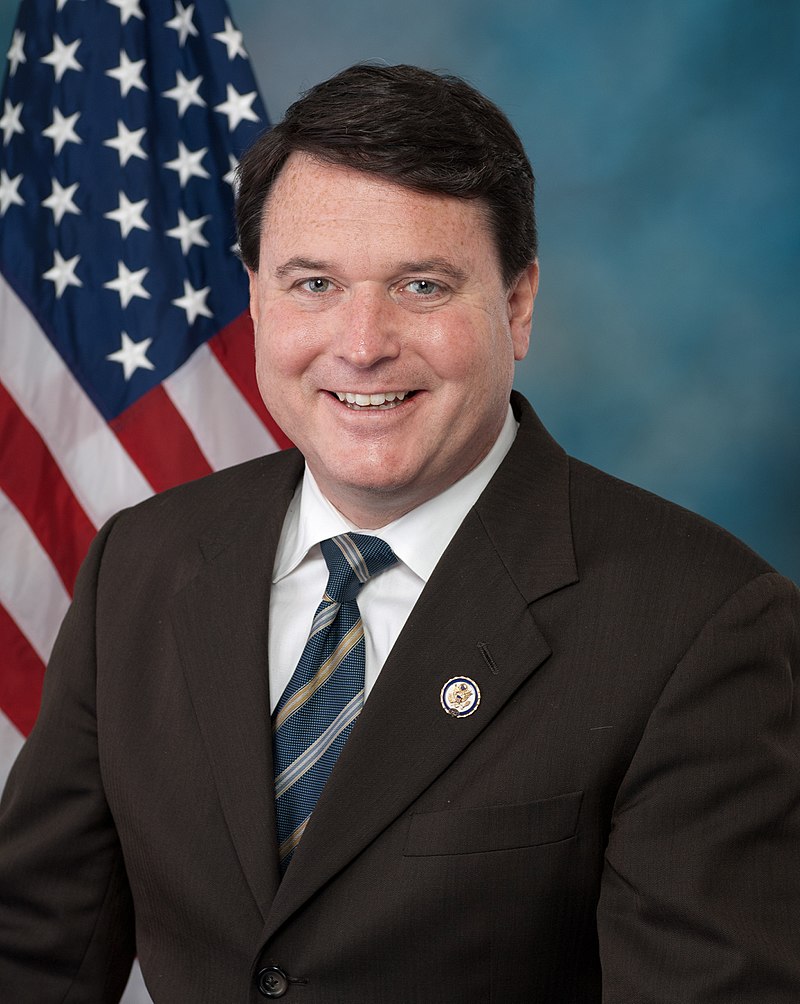
The intent here is to use Todd Rokita to trash Catholicism and in the process at least dim his political future, then hopefully dim it further with anomalous criminal cases which happened on his watch, and then hopefully eradicate it by his “best defense is a good offense” approach to global warming.
Rokita, a white male Republican, is currently the Attorney General of Indiana. He professes to be Catholic. He is married with children. He holds a BA from Wabash College and a JD from Indiana University. He defeated incumbent Curtis Hill, an African-American, in the Republican primary. He has apologized for asking who was the slave and who was the master in the relationship between African-Americans and the Democratic Party. He has been highly critical of “critical race theory.” He is married with children and all indications are that he is heterosexual.
Catholicism
Christianity in general and Roman Catholicism in particular contain certain precepts that are sexist, racist, and homophobic. The precepts are contained in the Bible itself, at least with regard to sexism and homophobia. An admonition for wives to be subject to their husbands is found at both Ephesians 5:22-24 and 1 Peter 3:1. Here are verses 22-24 1:
22 Wives, submit yourselves unto your own husbands, as unto the Lord.
23 For the husband is the head of the wife, even as Christ is the head of the church: and he is the saviour of the body.
24 Therefore as the church is subject unto Christ, so let the wives be to their own husbands in every thing.
There is no ambiguity in these passages, and no means of interpreting them to mean anything other than “serve and obey.”
However disadvantageous being a woman may be under Christian dogma, being a homosexual is way worse. Leviticus 20:13 says:
If a man also lie with mankind, as he lieth with a woman, both of them have committed an abomination: they shall surely be put to death; their blood shall be upon them.
This was Hebrew law, and Hebrew law was not overruled by Jesus. In Matthew 5:17, Jesus is reported to have said:
Do not think that I have come to abolish the Law or the Prophets; I have not come to abolish them but to fulfill them.
Presumably this would include the proscription against homosexuality.
The practice of slavery clearly enjoys the imprimatur of Christianity. In Leviticus 25:44-46 is written:
44 Both thy bondmen, and thy bondmaids, which thou shalt have, shall be of the heathen that are round about you; of them shall ye buy bondmen and bondmaids.
45 Moreover of the children of the strangers that do sojourn among you, of them shall ye buy, and of their families that are with you, which they begat in your land: and they shall be your possession.
46 And ye shall take them as an inheritance for your children after you, to inherit them for a possession; they shall be your bondmen for ever: but over your brethren the children of Israel, ye shall not rule one over another with rigour.
In Ephesians 6:5, the beloved Apostle Paul wrote:
Servants, be obedient to them that are your masters according to the flesh, with fear and trembling, in singleness of your heart, as unto Christ.…
And again in Colossians 3:22, we read:
Servants, obey in all things your masters according to the flesh; not with eyeservice, as menpleasers; but in singleness of heart, fearing God….
Note that in the two preceding passages, the word “servants” is the translation given the Greek word “doulos,” which means “slave” and which does not mean “servant.” The Greek word for “servant” is “diakonos.” The Catholic Church still translates “doulos “ as “slave,” and as late as 1455 authorized the practice of slavery through a papal bull. In that year, Pope Nicolas V issued Romanus Pontifex which expressly authorized King Alfonso of Portugal to:
invade, search out, capture, vanquish, and subdue all Saracens and pagans whatsoever, and other enemies of Christ wheresoever placed, and the kingdoms, dukedoms, principalities, dominions, possessions, and all movable and immovable goods whatsoever held and possessed by them and to reduce their persons to perpetual slavery...
Note also that racism and slavery are not necessarily the same things. Slavery was a common practice during the Biblical era, and no one race was exclusively enslaved. However, beginning with Isadore of Seville, Catholicism taught that Africans were descendents of Ham and that their enslavement was God’s punishment. Finally, as all those educated in the United States know, only African-Americans were subjected to slavery in the United States.
The foregoing amply demonstrates that the basis for Catholic doctrine is sexist, racist, and homophobic. Thankfully, these precepts have now in practice been de-emphasized, at least for the most part. Exactly how this de-emphasis has occurred is a mystery, at least with regard to sexism and homophobia. With regard to slavery, as has been previously touched upon, the Greek word “doulos” has intentionally been incorrectly re-interpreted. See especially Ephesians 6:5 and Colossians 3:22 of both the New English Bible and the New American Bible, both of which interpret “doulos” as “slave.” However it be accomplished, this de-emphasis is especially hard to understand given the passage in Revelations 22:18-19:
18For I testify unto every man that heareth the words of the prophecy of this book, If any man shall add unto these things, God shall add unto him the plagues that are written in this book:
19And if any man shall take away from the words of the book of this prophecy, God shall take away his part out of the book of life, and out of the holy city, and from the things which are written in this book.
It is impossible to escape the conclusion that Christianity has adopted the Tricky Dickie Nixon (through Ron Ziegler) approach with regard to these three statements (four if you count the nothing shall be added and nothing shall be taken out imperative) and, tacitly to be sure, is treating them as no longer operative. The reason Christianity has adopted the tacit approach is because to take an express approach would be tantamount to an admission that the Bible was not divinely inspired. It says here that this tacit approach constitutes a tacit admission to that effect anyway. It is obvious that the authors of the Bible proscribed homosexuality in order to further the policy of being fruitful and multiplying. It is obvious that they softened this approach in order to attract Greeks into the fold. See Mark 14:32-52. It is obvious that they prescribed wifely obedience to keep the husband happy at home so he would fight wars for the king. It is obvious that they felt safe prescribing obedience to the master because slavery was an accepted and prevalent practice during the Biblical era. It is obvious that they sought to – in the words Dr. Reverend Martin Luther King, Jr. – preserve the status quo. Finally, it is obvious that the King James Version deliberately mistranslated the various “doulos” passages in order to make them applicable to employees, who, under English law, were regarded as “servants.” Indeed, the body of law governing the relationship between employer and employee fell under the heading of “Master-Servant.” See, for example, Corpus Juris Secundum. “Badges and incidents” remain in a very major way.
Now let’s get back to Rokita. Be advised that this site does not accuse him of being either racist, sexist, or homophobic, even though he purports to be Catholic. It does accuse him of being a hypocrite vis-à-vis Catholicism. Even though he is heterosexual and professes to be Catholic, Rokita is very nearly certainly not homophobic. If he were, he would not have gone to an all-male undergraduate institution.Even though he went to an all-male undergraduate institution and professes to be Catholic, Rokita is probably not sexist. I wonder if he had a traditional Catholic wedding, and, if so, whether the words “serve and obey” were part of his wife’s vows. Even still, it is doubtful that he could have been elected __ times without any incidences of sexism surfacing. Moreover, even a cursory review of his high school yearbook suggests that he was grooming himself for a career in politics from a relatively young age, and more than half of those who vote in American elections are female. This site does not accuse Rokita of stupidity.
Now with regard to racism. During his speech to the attendees of the Lincoln-Reagan dinner on April 12, 2007, Rokita said that African Americans vote 90 percent Democrat. He asked, “How can that be? 90 to 10. Who’s the master and who’s the slave in that relationship?” 2 The remarks garnered a lot of publicity and fostered considerable controversy. After the eminently foreseeable backlash, Rokita apologized, and explained that his overall message about the black vote was meant to encourage the Republican Party to continue its efforts to diversify, in part by continuing to reach out to blacks. He then stated, “The word choice that I used in one part of those remarks was poor, and if I offended anyone then I ask their forgiveness for what was an insensitive metaphor.” 3 It seems that nearly everybody accepted his apology, including African-American lawmakers. Cf., Michael Richards and J. J. Redick
Given Rokita’s political astuteness, it is infinitely more likely that he was alluding to the mistranslation of the various slavery passages contained in the Bible as opposed to an illogical choice of words purportedly intended to encourage the Republican Party to diversify. In so doing, he demonstrated the futility of harping on the mistranslation – if somebody with the clout of Rokita was forced to apologize, what chance would a puny little anonymity have? This site accepts the challenge. How is it that a class of people who incessantly complain about the fact that their ancestors were enslaved one hundred and sixty years ago collectively embrace a religion that condones slavery. That is a question that no African-American wants to be asked. Rokita made it substantially more likely that those aware of the mistranslation would refrain from discussing religion and recite the Serenity Prayer (or is that the Impotence Prayer?) rather than ask this question. This explains why African-American lawmakers simply accepted Rokita’s apology rather than inquire whether his remarks were symptomatic of a racist personality. Again, compare Michael Richards and JJ Redick. (Note that another thing that followed is that somebody could be perceived as trying to procure the Black vote by intimidation and not be killed for it. Compare RFK with George Plimpton and the paragraphs in his Paper Lion pertaining to Roger Brown’s experience of rejection for being too white. 5 The reader should bear this in mind when reading about the murder of Antonia Macri-Reiner below. Note that still another consequence is that Rokita now has the golden excuse to prioritize African-American interests over white interests insofar as they conflict. He needs the excuse because the American bourgeoisie regularly reward African-America for the plethora of services it has rendered. These include everything strikebreaking, to military recruiting when they were exempt from selective service, and the origin of concessions per the disproprtionately Black UAW made by bargaining units to employers. If the squeeky wheel really got the grease in American society, the employee would be doing much better.) 4
Rokita is at the forefront of the effort to propagate a religion that he knows is racist, sexist, and homophobic. What is his motive for so doing? The bottom line is to preserve the current gross disparity of wealth. The key feature of Christianity is its concept of afterlife. Without belief in an afterlife, poor people with only a limited time to live would be far more likely to commit crimes against the rich. Really, what would they have to lose?
Here is another particularly odious illustration of Rokita patronizing the Catholic Church. What happens when a Catholic priest is accused of molesting a child? There are two possibilities: either the accuser is trying to extort, or the priest is guilty. With regard to criminal prosecutions, again there are two possibilities: either a crime is charged against either the priest for molestation or his accuser for extortion, or no crime is charged against either. Even if no criminal case is filed, a civil case for pecuniary (money) damages can be filed. Ignoring the possibility of dismissal, once again there are two possibilities: either the case goes to trial or it is settled out of court. An interesting consequence attaches if the case does go to trial. If the accuser prevails, a jury –or, if both parties waive the right to trial by jury, a judge – has found that it is more likely than not that the accused priest is guilty. That standard – i.e., more likely than not, is the same standard for a finding of the existence of probable cause. If the priest prevails, a jury –or, if both parties waive the right to trial by jury, a judge – has found that it is more likely than not that the accuser is lying, and thus the existence of probable cause to believe the accuser has attempted to extort. The existence of probable cause either way justifies the filing of a criminal charge. Thus, a verdict for either the priest or the accuser after trial presents the potential for embarrassment to the prosecutor.
Interesting though a verdict after trial may be, the concern here is with settlement agreements which invariably contain both a confidentiality clause and a clause specifying that the settlement is not an admission of guilt. The bottom line of these agreements is that a criminal goes unpunished, be it a guilty priest or a guilty extorter, and remains free to continue their behavior. It is clear to anybody in their right mind that these agreements are against public policy and should accordingly be declared illegal. Certainly, this fact is worthy of an advisory opinion. Many of us have seen the movie Spotlight. Great movie! … What’s your take on that, Todd?
Two Cases
In addition to what has been noted above, there are two cases which happened on Rokita’s watch and which pertain to race relations Rokita style. The first is the murder of Antonia “Toni” Macri-Reiner, a sixty-nine year old hypnotherapist. According to newspaper accounts, the murder occurred during the course of a home invasion. Macri-Reiner’s husband, daughter, and grandson were also in the home but were not attacked. The following is a scenario that fits the few known facts perfectly.
The fact that only Antonia was killed and the others were not even assaulted permits the inference that Antonia was targeted. A very viable motive can be found by considering the timing of hypnotherapist Macri-Reiner’s murder in conjunction with the RFK assassination. The timing arises from the fact that Sirhan was being considered for parole at the time Macri-Reiner was murdered. There are many – including the writer – who feel that Sirhan Sirhan was hypnotized when he assassinated RFK. There is a lot of evidence to support this assertion. Many among those who believe Sirhan was hypnotized believe that Sirhan hypnotized himself. Sirhan himself said so. Here is his account regarding the self-hypnosis:
I sat in front of a mirror in my room. I concentrated on RFK in the mirror: I had to stop him. Finally, his face was in that mirror instead of my own. Then I went to my notebook and started writing. It was part of the autosuggestion necessary to get my subjective mind to get my own objective mind moving. I read in the Rosicrucian magazine how if you wanted to do anything, you should write it down. It automatically works toward the realization of what you want…. 6
As a hypnotherapist, Macri-Reiner would have known this was rubbish. From the fact that Sirhan’s own account of self-hypnosis is rubbish can be inferred that somebody else did the hypnotizing. If somebody else did the hypnotizing, then that somebody is guilty of conspiring to assassinate RFK. Unless that somebody was also Palestinian, the motive assigned for the assassination – to-wit: revenge for RFK’s support for Israel – would be negated. Accordingly, the sympathy generated for Israel as a result of the motive originally assigned would disappear, and as relatively recent events have demonstrated, support for Israel remains high up on the US political agenda. Moreover, the negation of the motive originally assigned for the assassination would give rise to the question of what motive the hypnotist did have.
Now posit the following scenario. Munir Sirhan purchased the pistol used to assassinate RFK from George Erhard on February 15, 1968 7 not because his brother Sirhan Sirhan wantd to use it for target practice at the shooting range, but rather because he, (Munir, that is) sold marijuana and wanted it for self protection. When Martin Luther King, Jr. was assassinated, RFK was in Indianapolis, and gave a very well-known and widely publicized speech advocating maintaining the peace in that city. Some African-Americans considered his speech taken in conjunction with the presence of Plimpton in his entourage as a threat in the event that African-Americans rioted in Indianapolis. Sirhan Sirhan identified as African-American, and, in common parlance, was a little G wannabe. With his brother Munir’s gun, and accompanied by an unknown white female, he first tried to assassinate RFK at Robbie's Restaurant in Pamona on May 20. 8 He lost his nerve. Somebody hypnotized him, and when he showed up at the Ambassador again in the company of an unknown white female, he was able to maintain his nerve due at least in large part to the fact that he was hypnotized. (Maybe Tom Collins contributed.) The reason LAPD worked so hard to ignore the obvious was that assigning an anti-Israel motive would foster pro-Israel sentiment, a major political objective of that era.
Taking stock, we have a hypnotist with the ability to debunk Sirhan’s claim of self-hypnosis murdered during the pendency of Sirhan being considered for parole under circumstances that at the very least permit the inference that she was targeted. The murderer, the fact that he was thirteen years old notwithstanding, clearly should have been waived from juvenile court. While the waiver statute clearly contemplates the possibility of the juvenile court retaining jurisdiction, it is clear that the presumption is in favor of waiver. In order to overcome the presumption it must be shown that “it would be in the best interests of the child and of the safety and welfare of the community for the child to remain within the juvenile system. (IC 31-30-3-4) As far as the safety and welfare of the community is concerned, it is impossible to show this given that the fact that a murder committed during the course of a burglary is without more justification for imposition of the death penalty. Furthermore, even though nothing additional is required, the fact that the age of the victim is over sixty-two is yet another aggravating factor. IF this little angel was not waived, then whoever responsible for the failure is guilty of permitting the thirteen year old to murder at a serious discount, and depending upon the reason or reasons, might be guilty of being an accessory after the fact.
It appears that the perpetrator was not waived. The writer has made inquiries, but apparently the case is classified. (A little sarcasm, here.) The perpetrator would not happen to be African-American, would he, Todd?
The second case is captioned State of Indiana v. Shamar Duncan, case number 49D07-2209-MR-023731 The case is scheduled to go to trial on January 13, 2025. Mr. Duncan is alleged to have shot and killed Simmie Poetsema, as well as shooting and wounding two other Dutch soldiers. The killing took place on August 27, 2022. Duncan is African-American; the Dutch soldiers were white. According to newspaper accounts, Duncan, who up to that point had remained upstanding enough to legally possess a pistol, was “looking for trouble.”
[A] witness watched as Duncan’s group crossed Meridian Street near the IndyStar building and shoved a man in one group, which walked away. Duncan’s group then got into a second altercation that would turn deadly, the witness told police in the probable cause affidavit for Duncan’s arrest. 9
According to the police, a person accompanying Duncan scolded him for shooting out of the vehicle as it drove away, and Duncan is reported to have retorted, “I just spazzed.” One must wonder why Duncan was “looking for trouble.” An easy answer can be found from the reports of the incident at Brigham Young regarding racial slurs directed at an African-American female volleyball player from Duke. The most likely explanation of the shootings is that Duncan was aware of the incident at Brigham Young, adopted the rationale ascribed to terrorism, and harassed white people in an attempt to discourage future incidents like the one that allegedly occurred at Brigham Young.
The legal system, however, is often reluctant to assert racism on the part of an African-American perpetrator, even when it is obvious. The very widely publicized case of Hurricane Carter is a glaring example of prosecutorial fudging with regard to racial motive, and this is true without regard to actual guilt or innocence. Here are two facts that simply cannot be denied (and nobody has tried). Fact number one is that Carter purportedly followed the Malcolm X philosophy of “by any means necessary.” His invective in an October 1964 article in the Saturday Evening Post would have been impossible to deny and – whether justly of unjustly - highly inflammatory at trial. He certainly never repudiated the article before the murders. Fact number two is that at Carter’s first trial, race was not asserted to be a motive. 10 A lot of the Saturday Evening Post stuff could have been attributed to publicizing his upcoming fight, but the “by any means necessary” stuff was already well known. Had racial retaliation been asserted as the motive at the first trial, Carter would have been in the unenviable position of either acknowledging its existence or explaining that his (and Malcolm X’s) position was taken simply to make Martin Luther King’s acceptance by the prejudiced segment of white America the preferable alternative. (ftnt See King’s famous letter from the Birmingham Jail.) Had Carter taken the latter course, the object of the exercise would have been defeated. The prosecution’s failure to assert racial retaliation for the murder of an African-American as the motive demonstrates conclusively not only that the prosecution was not racist, but was in fact supportive of the African-American agenda. (ftnt The nearly universal perception of the conviction as unjust and inspired by racism represents an attempt to whitewash the piece-of-work textile mill owners as opposed to the workers. The fact of the matter is that there was certainly a lot of evidence against Carter, including his presence at the right time near the scene in a vehicle that matched the general description of the getaway car, his comments in the Saturday Evening Post, and his attempt to procure a pistol before the murders occurred, not to mention ammunition in the car that was compatible with the murder weapon. The two linchpins of the defense were the initial assertion of the surviving victim that Carter was not the person who shot him, and Alfred Bellow’s initial assertion that Carter was not one of the people he saw get into the getaway car. Bellow’s assertion is easily explained, since he took all the money out of the cash register when he arrived after the murders. So long as the murders went unsolved, everybody would assume the money was taken by the murderers. The only way anybody would be any the wiser was if the murderers were apprehended. That a murder is committed during the course of robbery is an aggravating factor justifying the imposition of the death penalty. Had Bellow identified Carter without first receiving immunity and had Carter been convicted, at some point Carter would have said that he did not take the money. That would leave Bellow holding the bag, since Patty “Valentine” observed him at the scene immediately after the murders. With regard to the surviving victim’s failure to identify, forget for now about the fact that he’d just been shot in the head and had to have been at least shaken up. Tell me how to surpass the irony of claiming that the surviving victim’s misidentification proves Carter’s innocence when the unreliability of white eyewitness identification of African-Americans is so regularly asserted as the cause of an unjust conviction. (And sometimes it really is.) Maybe – just maybe - the irony is exceeded by the fact that if poor Mr.s Carter and Artis were indeed unjustly convicted, then the two African-American men who actually committed the murders let it all happen. None of the incessant wailings of African-America about the unjustness of the criminal justice system rebuke their African-American “brothers” who permit their innocent brothers to be unjustly convicted. That is one interesting omission. Nor do they ever waive the right to trial by jury, which fact presents interesting questions about the proceedings before the EEOC.) Carter’s conviction was overturned on appeal. (ftnt case citation) Most interestingly, Carter and Artis were re-tried in 1976, and at the retrial, the prosecution did proffer racism as the motive. After Carter was convicted yet again, he petitioned the federal district court for a writ of habeas corpus. What follows is an excerpt from the opinion of the federal district court judge who heard Carter’s Petition for Writ of Habeas Corpus:
The prosecution, in support of its "racial revenge motive" relied upon what it has termed "twenty points" of evidence. (31T55-77) Of those points, only the following pertained directly to [Carter] on the issue of motive:
1. [Carter] knew of the murder of Holloway, a black man.
2. [Carter was] friends of Edward Rawls, Holloway's stepson.
3. Carter extended his condolences to Rawls prior to the murders at the Lafayette Bar.
4. Carter testified before the grand jury that there was talk that night in the black community of a possible "shaking" (i.e. rock and bottle throwing).
The balance of the purported evidence as to racial revenge might support the prosecutor's theory in general as to motive, but had little relationship to the petitioners. Indeed, it is difficult to fathom some of its admissibility as against them. For instance:
1. The three other Lafayette Bar patrons were shot only because they were witnesses to the killing of Oliver; there was no evidence of robbery. At best this evidence is consistent with the prosecutor's theory but adds nothing to implicate [Carter].
2. There was a large and angry crowd gathered outside the Waltz Inn shortly after the shooting. It is difficult to understand how such a gathering could be imputed to [Carter]. There is no evidence that they were present or even knew of such a gathering.
3. The Lafayette Bar had primarily white patrons and was an ideal target of the anger of the black community. Again there is no evidence that [Carter had any knowledge of the purported history of the Lafayette Bar or ever expressed any animosity towards it.
4. Rawls went to police headquarters and demanded action, became agitated and was ordered to leave. There is no testimony that Carter] knew or learned of this incident, and again it is difficult to comprehend how such activities could have been considered in assessing their motives. Carter v. Rafferty, 621 F. Supp. 533 (D.N.J. 1985) at 538. (Italics in original)
The district court judge held that “the state violated the Due Process rights of petitioners by improperly appealing to racial prejudice during the trial by arguing that the killings were motivated by racial revenge.”
There is no indication that the prosecution offered Carter’s autobiography entitled “The Sixteenth Round” into evidence. Here are some excerpts from that book:
“America, the dirty white racist bitch!” 11
“Fuck these crackers!” 12
“… I had decided that no matter how high I flew in my career, or to what heights I scaled, I would never get too big to forget [African – Americans].” 13
“While earlier in my career my career my concern was for the welfare of all prize fighters, it later narrowed down only to black fighters, and then came to be for black people in general.” 14
Additionally, he was a member and eventual leader of a local gang called the Apaches, and was thus very familiar with the gang mentality. 15
It should come as no surprise that none of the content immediately above made it into either Dylan’s song or Norman Jewison’s movie. It says here that the only reason it appeared in his book at all is so that the reader will think Carter was also being honest when he wrote about “high yellow.” 16 While the term has been around for quite some time, its use changed after George Plimpton wrote in Paper Lion about Roger Brown’s rejection because he was too light, especially after RFK included Plimpton in his entourage. The reader should note the reluctance on the part of the criminal justice system to assign racism as a motive for black on white crime. See especially the fact that many blamed Mick Jagger for the attempt on his life by Meredith Hunter, and the criminal justice aftermath thereof, even though the attempt and Hunter's consequent death were video recorded.
The chances of race being proffered as motive in Duncan’s trial are infinitesimal.
Global Warming
Finally, there Rokita’s conduct with regard to global warming, and what follows applies even if the experts are wrong about its cause. The earth’s surface temperature has increased by 1.6 degrees Fahrenheit since 1880. The rate of increase has doubled since 1981. There is more carbon dioxide in the atmosphere than there has been in the last 40,000 years. These facts are not in dispute. The consensus of the scientific community is that: 1) the increase of greenhouse gasses is the primary cause of the increase in temperature due to a phenomena known as the greenhouse effect; 2) human activity is the primary cause of the increase in greenhouse gasses; and 3) continuing emissions of greenhouse gasses result in both a greater probability and a greater severity will increase the likelihood and severity of global effects.
Rokita has stated, “I think it’s arrogant that we think as people that we can somehow change the climate of the whole earth when science is telling us that there’s a cycle to all this .…” The writer is not qualified to evaluate the consensus scientifically. I do know that timing is evidence, and the fact that B (in this case global warming) follows A (in this case drastically increased amounts of carbon in the atmosphere) constitutes at least some evidence that A caused B. Rokita is not qualified to evaluate the consensus, either. As a lawyer, however, he does know that while post hoc ergo propter hoc is insufficient proof, it does constitute evidence, at least where it is possible for A to cause B. He chooses to dismiss it without being qualified to do so. It seems to me that the only arrogance involved here belongs to him. He sounds like nothing so much as a tobacco company representative who denied that smoking cigarettes causes cancer for all those years. He is certainly not the guy we want making major decisions “the greater good” that “coincidentally” benefit big oil and big coal. He is a complete and utter fraud.
____________________________________________________________________________________________________________________________________________________________________________________________________________________________________________________________________________________________