"If a man also lie with mankind, as he lieth with a woman, both of them have committed an abomination: they shall surely be put to death; their blood shall be upon them." Leviticus 20:13
“We venture to believe that neither Hamilton nor Madison, nor any other competent person then or later, ever supposed that to make criminal the counseling of a murder within the jurisdiction of Congress would be an unconstitutional interference with free speech.” Oliver Wendall Holmes, writing for a unanimous court in Frohwork v. U.S.
______________________________________________________________________________________________________________________________________________________________
______________________________________________________________________________________________________________________________________________________________
The purpose of this site is twofold. The first is to expose Brandenburg v. Ohio 1 for exactly what it is: an atrocity conceived 1) to permit continued references to Leviticus 20:13 whether in context or not; and 2) to provide Congress with an excuse for not protecting against discrimination based upon exercise of the first amendment right to freedom of speech in the Civil Rights Act of 1964. Be advised at the outset that in Brandenburg the Supreme Court of the United States (SCOTUS) held that the right to say “Bury the niggers” (that’s a direct quote from the opinion) is protected by the First Amendment’s guarantee of freedom of speech. It will be shown conclusively that the result there is so far removed from the intended meaning of the first amendment that it is beyond absurd. The case’s continued vitality is an abomination. The second and equally important purpose of this site is to demonstrate how Todd Rokita, Attorney General for the State of Indiana, engaged in a raw abuse of power with the intent of stifling criticism of Charlie Kirk.
Leviticus 20:13 states: "If a man also lie with mankind, as he lieth with a woman, both of them have committed an abomination: they shall surely be put to death; their blood shall be upon them." (King James Version (KJV)) It is crucial to note that this is not an exhortation addressed to any citizen to do “the Lord’s work,” and is in no way a license to engage in vigilantism. Considered within its context, the passage plainly contemplates something closely resembling a judicial determination of guilt and judicially ordered punishment before the imposition of the death penalty. See Deuteronomy 16:18 et seq.
Charlie Kirk was a conservative influencer, and co-founded an organization called Turning Point, USA. He had a podcast called the Charlie Kirk Show. This organization targeted college students, and Kirk sometimes appeared on campuses and spoke publicly on behalf of the organization. He was anti-LGBT, and referenced Levitcus 20:13 out of context with approval on multiple occasions. He was assassinated on September 10, 2025 while speaking at a Turning Point USA event at Utah Valley University, allegedly by Tyler Robinson.

Less than two weeks later, Indiana Attorney General Todd Rokita issued the following statement:
As a matter of good government and sound public policy, schools would be wise to remove from the classroom teachers who express support for or attempt to excuse political violence,” Rokita said. “And as a matter of morality, this moment demands decisive action from public officials to address noxious speech from government employees that undermines public confidence in our schools and corrodes public discourse.
This statement effectively “bundles” Kirk’s references to Leviticus 20:13 with other legitimate (even if erroneous) political content, and thus equates objection to it with advocacy of political violence. In other words ( and this is fully in accord with his bad April Fools joke in 2025 in which he claimed that he was swapping out his beloved pro-gun flag for a gay pride flag) , Rokita believes that it’s OK to advocate killing gays but that it’s not OK to object to advocating killing gays. As will be seen below, not only is Rokita way out of bounds, he is also sitting on a First Amendment powder keg.
For the purpose of First Amendment analysis, there are currently five categories of speech: incitement, fighting words, defamation, pornography, and commercial speech. The only category discussed at any length in this site is incitement. Incitement is “the act of provoking unlawful behavior or urging someone to behave unlawfully.” Strangely enough, SCOTUS has held that speech falling under this category is sometimes entitled to protection under the First Amendment. In Schenck v. United States3, per Justice Oliver Wendell Holmes, it announced the “clear and present danger” standard. Holmes said, “The question in every case is whether the words used are used in such circumstances and are of such a nature as to create a clear and present danger that they will bring about the substantive evils that Congress has a right to prevent.” 4 5 No precedents were cited to support this standard. The reason no precedents were cited to support this standard is because there weren’t any. 6
To state the obvious with regard to the interpretation of the First Amendment given in Schenck, there are only two broad possibilities: 1) it was what the framers intended; or 2) it wasn’t what the framers intended. If the first possibility is the correct one, the question arises as to what took so long to arrive at it. If the second possibility is the correct one, the question becomes why SCOTUS chose to misinterpret it. The answer to whichever question the reader chooses to ask is that the US had just entered what was to become known as World War I and anticipated a German propaganda campaign. One component of this campaign was anticipated to be an attack on established Christian dogma in America. As will be seen below, this attack would have been both well-reasoned and vicious. The passage found at Leviticus 20:13 was acutely susceptible to this attack.
The legal analysis of Leviticus 20:13 vis-à-vis the First Amendment’s guarantee of “the freedom of speech” involves interpretation of a provision of the Constitution of the United States. All of the SCOTUS cases hold that when a provision of the constitution requires interpretation, the task of the court is to give the provision in question the meaning that the "framers" (the guys who wrote and ratified the Constitution) intended it to have. This is known as the doctrine of original intent. All of the cases also hold that the first step in determining the intent of the framers is to examine the language of the provision itself. If the language is clear and unambiguous, then no interpreting is required, and the plain language should be given effect. Only when there is ambiguity in the language of the provision does the need for interpretation arise. So the first step in the analysis is to examine the language of the amendment. In its entirety, the First Amendment states as follows:
Congress shall make no law respecting an establishment of religion, or prohibiting the free exercise thereof; or abridging the freedom of speech, or of the press; or the right of the people peaceably to assemble, and to petition the Government for a redress of grievances.
The phrase "Congress shall make no law" at least appears to be an absolute; i. e., it appears to mean just what it says - no law. On its face, then, the amendment forbids, in absolute terms, the passage of any law infringing upon any of whatever freedoms are guaranteed. There would appear to be no ambiguity in the absolute nature of the prohibition.
The conclusion that the prohibition is not absolute is implicitly justified by the following logic. Everybody knows what "speech" is. "Speech" happens when somebody says something. Everyone knows what "freedom" is. "Freedom" happens when restraint is absent. Obviously, then, "the freedom of speech" means that one can say whatever one wants without fear of legal repercussion. Yet it is clear that the framers could not have intended to create a right to shout "Fire!" in a crowded theater. It is also clear that the framers could not have intended to protect someone who announced the date and time of the sailing of troop ships. Therefore, the framers could not have intended to absolutely prohibit any law which infringes upon the right of a citizen to say whatever he wants whenever he wants to. Thus, the First Amendment must not be an absolute after all. So while the language used would seem to compel the conclusion that the First Amendment is an absolute, elementary logic “reveals” the “ambiguity” necessary to somehow conclude that it is not.
When one or more ambiguities are found, the courts resort to aids extrinsic to the language itself to assist with interpretation. Typically, the first extrinsic aid it resorts to is history. The history giving rise to the First Amendment is that of the common law crime of seditious libel, and even a cursory analysis of it demonstrates that the phrase “the freedom of speech” was esoteric.
At the time the First Amendment was ratified, the law of England proscribed anything defamatory being leveled at the government. It is important to note that the law in England at one time did permit truthful criticism of the king. The Slander and Sedition Act of 1275 proscribed “the telling or publishing of "any false news or tales whereby discord or occasion of discord or slander may grow between the king and his people or the great men of the realm." (Emphasis added.) (This is statutory law.) However, a subsequent case decided by the Star Chamber in 1606 6.5 held that it was not necessary that the material be false - it was enough the uttered or published material be libelous. (This is common law.) The citizenry thus lost the right to truthfully criticize its government. The natural inclination to resent the loss of a right was without question exacerbated by the manner by which the new law was enforced - the Star Chamber and "High Commission" of the Tudor-Stuart period used general warrants to suppress political and religious dissent.
Such was the state of the law in both England and the colonies until the criminal case against John Peter Zenger for seditious libel. Zenger published a newspaper called the New York Weekly Journal in which he was frequently critical of William Cosby, the Governor of New York. In 1735, he was criminally prosecuted for seditious libel because of this criticism. In his opening statement, Zenger’s lawyer, Andrew Hamilton, said:
I am truly very unequal to such an undertaking on many accounts. And you can see I labor under the weight of many years, and am borne down with great infirmities of the body; yet old and weak as I am, I should think it my duty, if required, to go to the utmost part of the land where my service could be of any use in assisting to quench the flame of prosecutions upon [charges] set on foot by the government to deprive a people of the right of remonstrating of the arbitrary attempts of men in power. Men who injure and oppress the people under their administration provoke them to cry out and complain; and then make that very complaint the foundation for new oppressions and prosecutions.
In his closing argument, Zenger’s lawyer asserted that the law in the colonies was not identical to the law in England, and that in the colonies truth was a defense to a charge of seditious libel, unlike the case in England. The judge disagreed, but the jury did not, and Zenger was acquitted. The case was widely publicized, and although it is not unusual for a lawyer to possess an exaggerated sense of self-importance, these further remarks by Hamilton are at least interesting:
The question before the court … is not of small nor private concern, it is not the cause of a poor printer, nor of New York alone, which you are now trying. No! It may in its consequences affect every freeman that lives under a British government on the main of America.
It should be carefully noted that Zenger’s argument with regard to the extent of the freedom to criticize the government was limited to criticism that was true. It should be noted further that Zenger’s prosecutor did not have the burden of proving that Zenger’s criticism was false. Instead, Zenger had the burden of proving his criticism was true. As stated previously, the Zenger case was widely publicized, and Zenger’s acquittal enjoyed the approval of the majority of the colonists. The result in the Zenger case obviously permitted truthful criticism of the government while the British laws pertaining to seditious libel did not. Certainly this would be regarded as the freedom of speech by the American colonists. The absence of any debate over the meaning of the “the freedom of speech” clause further demonstrates that its meaning was well known.
Now, at least with regard to freedom of speech and freedom of the press, it should be easy to see how the framers could have intended the phrase "Congress shall make no law" to mean just that. Defining "the freedom of speech" as the right to truthfully criticize the government permits construing the phrase "Congress shall make no law" exactly literally. Because such a ready definition of the phrase "the freedom of speech" is supplied by the history of the colonial era, and because utilizing this definition enables literal interpretation of the absolute proscription, it is undoubtedly the superior construction. Note additionally that the word “the” is not without import. It is known as the definite article, and is used as a determiner when the noun coming after it is distinct. If there are five pens on a desk, one does not say, “Give me the pen, please.” However, if only one pen is on the desk, one does say, “Give me the pen, please.” The fact that the framers chose to use the word “the” is yet another indication that everybody knew which freedom was being referenced.
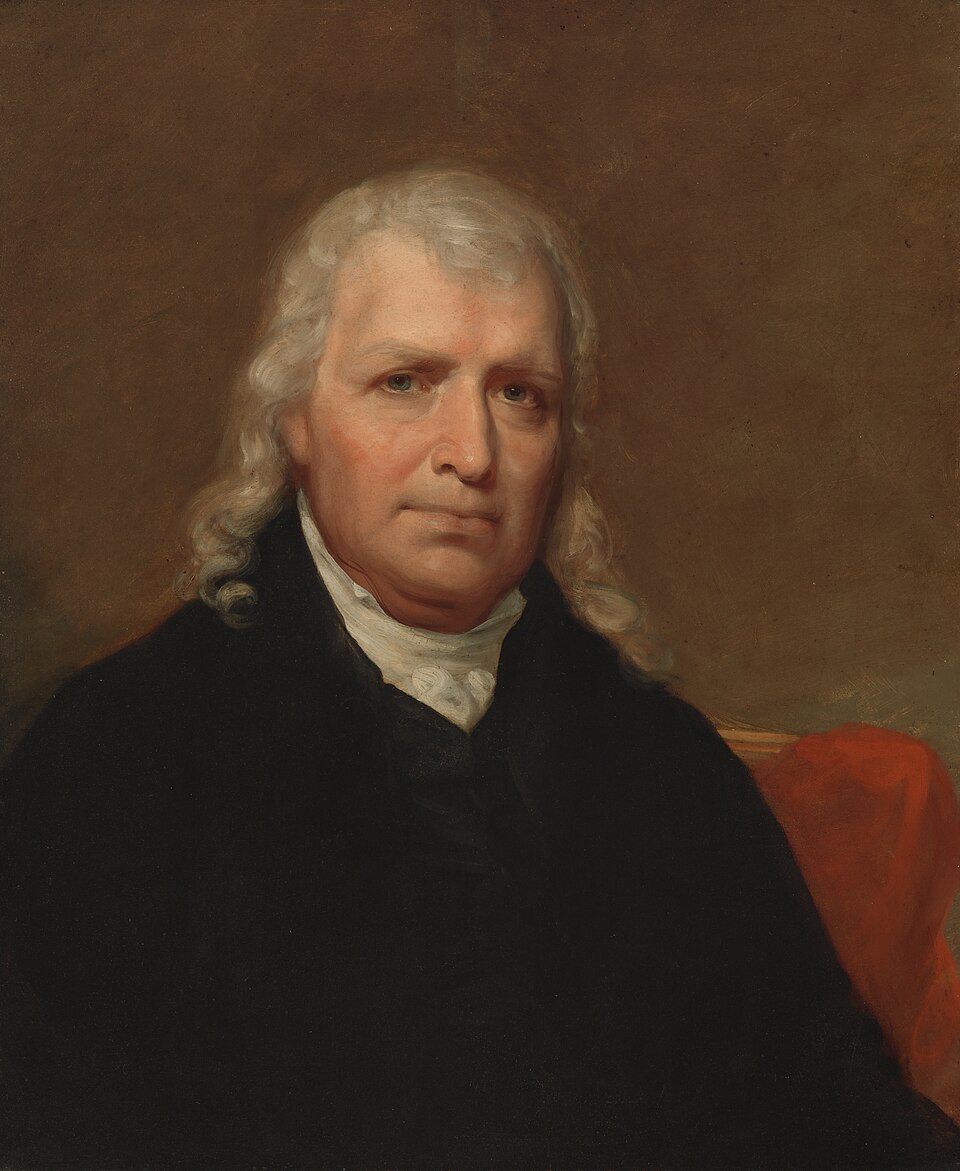
Beginning in July of 1798, the United States became involved in a so-called quasi-war with France. In September of that year, the Sedition Act of 1798 became effective. 7 The act expired by its terms in March of 1801. Under the terms of the Sedition Act, anybody who uttered anything that was false and defamatory of the government with seditious intent was guilty of its violation. Just as in the Zenger case, the burden of establish the truth of the defamatory matter was upon the accused. The rationale for placing the burden of proof on the defendant was articulated by Samuel Chase, Justice of the Supreme Court who was “riding circuit” to preside over the prosecution of Thomas Cooper. After the close of the evidence, he instructed the jury, “If you undertake to publish without having proper evidence before you to justify your assertions, you do it at your own risk.” 8
For the purposes of this site, the most important feature of the prosecutions for violation of the Sedition Act is that none mentioned anything regarding a clear and present danger. Instead, the question of guilt was resolved by determining whether the libelous material had a “bad tendency” and then inquiring what else could have the accused intended.9 The reader should bear this in mind during the discussion of both the “clear and present danger” standard and the “imminent threat” standard, infra.
With reference to the “clear and present danger” standard, two cases are of particular interest. One is the prosecution of Charles Holt of Danford, Connecticut, editor of the New London Bee. Holt had the audacity to call the provisional army that Alexander Hamilton was attempting to raise a “standing army,” and criticized Hamilton for his self-admitted adultery. He was indicted under the Sedition Act, under an indictment that charged him with attempting to excite opposition to and resistance against the laws establishing the army recruiting service. 10 The wording of the indictment - “tending to discourage the recruiting service” - clearly demonstrates that libel having a “bad tendency” was sufficient to sustain a verdict of guilty. 11 Interestingly, but beyond the scope of this site, the falsity of the seditious libel consisted of the fact that the army Hamilton was attempting to raise was indeed a provisional army, and not a standing one.12
The particularly interesting second case is the prosecution of Thomas Cooper. Cooper wrote a handbill which contained, inter alia, the following: “Nor were we yet saddled with the expense of a permanent navy, or threatened under his auspices with the existence of a standing army.” 13 Cooper was convicted under the Sedition Act because his criticism “tended to lead to insurrection against the government,” notwithstanding the fact that had an insurrection occurred, Cooper’s causation would have been “indirect.” 14 Thus, in the Cooper case, just like in the Holt case, it is easily seen that a bad tendency was enough to sustain a verdict, even though causation would have been indirect.
It should be noted that the constitutionality of the Sedition Act was never passed upon by the Supreme Court. There are, however, at least several factors which compel the conclusion that the act was indeed constitutional, and these in addition to how its language mirrors the Zenger case. One is that the members of the Congress which passed the law were roughly contemporaneous with the guys who ratified the Constitution. Remember the doctrine of original intent? These guys certainly knew what the First Amendment meant when they passed the Sedition Act. Another is that individual justices of the Supreme Court did preside over prosecutions for violating the act,15 and one commentator has suggested - or at least invited the inference - that this militates in favor of its constitutionality. 16 17 A third factor is that none of those convicted for violating the act ever appealed their convictions to the Supreme Court, an avenue which was open to them at that time in the event that they had any level of confidence that the Sedition Act violated the First Amendment . The sum of these factors establish that the act was considered constitutional, at last vis-à-vis the First Amendment, by those most familiar with the intended meaning of the First Amendment. 18It should also be noted that all of the prosecutions under the Sedition Act were against “Jeffersonians” – i.e., Republicans. The Sedition Act was unpopular, and one of the reasons Thomas Jefferson prevailed in the presidential election of 1800. 19 After taking office, he soon pardoned all of those who were convicted under it. 20 It is clear that the reason behind these pardons was not that he thought the act was unconstitutional. According to one scholar, “[Jefferspn] accepted without question the dominant view of his generation that government could be criminally assaulted merely by the expression of critical opinions that allegedly tended to subvert it by lowering it in the public’s esteem."21 His draft constitution for Virginian in 1783 proposed that the press ‘shall be subject to no other restraint than liableness to legal prosecution for false facts printed and published.” 22Indeed, once they rose to power, the Jeffersonians were not much more tolerant than were the Federalists. 23 It is thus clear that the Sedition Act was regarded as constitutional at the time it remained in effect, even if some indicated to the contrary. However, there is no question that – for whatever reason - the act was applied in an unconstitutional manner, especially with regard to the question of falsity.24
The passage and enforcement of the Sedition Act of 1798 is often portrayed as a political ploy by the Federalists to prevent criticism of their officeholders and policies. This portrayal has been used to assert that the Act was unconstitutional, even though its language echoed the result in the Zenger case. There are two problems with this assertion. First is that its application was the only unconstitutional feature of the act. It is at best doubtful that any of the convictions under it would have been procured if the issue of falsity had been confined to fact instead of opinion. Secondly, the entire three year episode is much more accurately viewed as a united (i.e., Federalists and Republicans acting in concert) effort to placate the British in order to postpone another armed conflict with them until the United States and its French allies could grow stronger.
Now fast forward to World War I. In 1917, the United States entered World War I as a combatant. The Selective Service Act was enacted, and under it “Uncle Sam” was authorized to raise an army via conscription. In anticipation that there would be some domestic opposition to the war, Congress also passed the Espionage Act of 1917. 25 Under the terms of the Espionage Act, it was illegal to, inter alia, “willfully cause or attempt to cause insubordination, disloyalty, mutiny, refusal of duty, in the military or naval forces of the United States, or … willfully obstruct the recruiting or enlistment service of the United States.” Charles Schenck distributed literature urging people to disobey the draft, and was convicted for violating the act even though the literature urged only peaceful resistance. He appealed, asserting as grounds that the Espionage Act violated the First Amendment’s guarantee of freedom of speech. SCOTUS disagreed and upheld the conviction. In so doing, it propounded the new “clear and present danger” standard. Under this standard, “[t]he question in every case is whether the words used are used in such circumstances and are of such a nature as to create a clear and present danger that they will bring about the substantive evils that Congress has a right to prevent.” The “clear and present” part is obviously more stringent than the “bad tendency” requirement under the prosecutions for the Sedition Act of 1798. The clearly anomalous result is that at least some incitement is protected by the First Amendment. In other words, sometimes the freedom of speech guarantees the right to urge violation of the law, even though the would-be inciter is no less culpable than he would be if a clear and present danger did exist. The question arises as to why SCOTUS chose to introduce this anomaly into its first amendment jurisprudence.
The German propaganda campaign was originally directed at England and France. One component of this campaign was an attack on Christianity Anglo-Franco style. One part of this attack was Albert Schweitzer's Quest of the Historical Jesus. The book was first published in 1906 and translated into English in 1910. At least for the most part, it consists of a compilation of highlights of criticism of Christianity written by other German authors. By adopting this approach, Schweitzer was able to include a voluminous amount of criticism that did not have to be consistent and did not require a single, coherent theory to explain away some really tough questions. Authors that were highlighted include the following. One is Samuel Reimarus , who concluded that Jesus mistakenly thought he was the messiah, was aware of the so-called prophecy pertaining thereto, and deliberately contrived to fulfill it. 26 Another is David Friederich Strauss, who noted, inter alia, that the genealogies found in Matthew and Luke, both of which by their terms purport to trace the lineage of Joseph, prove that Jesus was once thought of as human and not divine. 27 Still another is Bruno Bauer, a contemporary and sometimes friend of Karl Marx, who opined that the Gospels were literary fiction. 28 The final author mentioned here is William Wrede, who discussed the two conceptions of Jesus’ life – the natural and supernatural – and concluded that the supernatural was portrayed by the Gospel of Mark as a secret between Jesus and the apostles to explain away the fact that the general public was unaware of any messianic claim. 29
Schwietzer’s book cannot not be explained away merely as his contribution to academia. Reimarus had the good sense to ensure that his work would not be published until after his death. As Schweitzer himself noted, Strauss, Bahrdt, and Bauer all had their "careers broken" as a result of their criticism. 30 Given the demise of so many of the critics digested by Schweitzer, it is difficult to avoid the conclusion that Schweitzer enjoyed the imprimatur of the German government since he did not experience the difficulties suffered by his predecessors. Neither did William Wrede, who wrote only five years before Schweitzer wrote. Moreover, Schweitzer states specifically that the greatest books written about the search for the historical Jesus - those authored by Reimarus and Strauss - were written out of hate, and with a desire to escape the religious tyranny of dogma. 31 Describing dogma as tyrannical is atypical academia fare.
If indeed Schweitzer and Wrede wrote as part of a propaganda campaign, the question arises as to why England and France published translations. The answer is twofold and simple. First, any failure to provide English and French people with translation might later appear as an attempt to conceal. Secondly, and much more importantly, no mention is made in either Schweitzer or Wrede of the theological significance of Zionism. Beginning with Moses Hess and continuing through Theodor Herzl, much of Europe and especially France contended with the specter of Zionism for most of the latter half of the nineteenth century. Readers of Wrede and Schweitzer were invited to infer that if Zionism really presented a theological threat it surely would have been mentioned given all the other criticism that was, even as both the Central Powers and the Allied Powers both planned to control Palestine. So what is the theological significance of Zionism? The New Testament book entitled Acts of the Apostles at verses six and seven of chapter one provides as follows:
6 When they therefore were come together, they asked of him, saying, Lord, wilt thou at this time restore again the kingdom to Israel? 7 And he said unto them, It is not for you to know the times or the seasons, which the Father hath put in his own power.
The theological significance of these passages cannot be overstated. Jesus’ response constitutes a tacit admission that “restor[ing] the kingdom was at least one aspect of his messianic mission. The question is what does the phrase ”restore again the kingdom to Israel” mean. The narrowest interpretation, and the most favorable one to Christianity, is that it means a Jewish theocracy is re-established. 32 It is crucial to note that if a Jewish theocracy were to be established and Jesus was not the one to restore it, one of two important implications would follow: first, he cannot be the messiah; or second, the reported conversation between the purportedly resurrected Jesus and his disciples never occurred. From this second implication can be inferred that the report of Jesus' appearance after his death are also erroneous.
Acutely interestingly, Russia’s Leo Tolstoy authored a book entitled The Kingdom of God Is Within You which with only some “stretching” offered an alternative interpretation of the provisions of Acts 1:6-7. Both the Allies and the Central Powers chose to resolve the question as to which interpretation was correct by war instead of debate, and it is at least interesting to contemplate a situation in which a Jewish theocracy was restored in Palestine by means of a Central Powers’ victory vis-à-vis Christianity western hemisphere style.
A second component of the attack on Christianity Anglo-Franco style was the Eulenburg affair. Given the timing, it was not a diversion from something the German government wanted overshadowed as one might normally suspect. It occurred in close temporal proximity to the release and translation of Quest as well as to German escalation of the Anglo-German naval arms race. It began in 1906 with a very public accusation against German general Kuno Graf von Moltke, and eventually included accusations against associates of Kaiser Wilhelm II. The accusations garnered an enormous amount of publicity, and – most importantly for the purposes of this site – this publicity was not limited to the confines of Germany. The result was that Germany was much maligned due to the purported homosexuality of its high officials.
So how did the international publicity surrounding either the sensationalized homosexuality of High German officials or the sensationalized levying of false charges of homosexuality against High German officials constitute an attack on the Anglo-French version of Christianity? The answer involves how the King James version of the Bible (KJV) came to exist. The primary source for its New Testament was the Textus Receptus, assembled by Desiderius Erasmus Roterodamus, and Desiderius Erasmus Roterodamus was obviously homosexual. 33. Thus, any derision of German homosexuality was in effect derision of a very important contributor to the KJV, and thus of the KJV itself. The irony of this situation is quite comically exacerbated by the provision contained in Levitcus 20:13, which the reader will recall provides for the death penalty for sodomites. This means that a person who was abominable and detestable in the eyes of the Lord played a very prominent role in delivering his word.
Remember the context of Leviticus 20:13. Once again, believers were not being commanded to be vigilantes, and imposition of the death penalty required something closely analogous to a judicial determination of guilt and judicially ordered punishment. When the passage is considered in conjunction with its overall context, it obviously does not pose a clear and present danger. However, the passage presents problems in the United States for two reasons. One is that judicial structure provided by the context of the passage does not exist in the United States. There thus exists a situation where “God’s perfect law” requires the death penalty, but man’s law prohibits it, which poses a dilemma for the true believer. The second is a combination of the facts that the passage is routinely taken out of its context by speakers addressing an audience which is for the most part ignorant of its context. See, e.g., Charlie Kirk. Because of these two problems, it is clear that the passage has a “bad tendency,” and would therefore not be protected by the First Amendment under analysis prior to that in Schenck. Thus, but for the change in analysis announced in Schenck it could properly have been considered “incitement.”
Be advised that the German WWI propaganda was not the first time one country attempted to undermine the religion of another, and further that the Schenck case and its progeny would not be the only time SCOTUS revised precedent to accommodate Christianity. The United States itself engaged in just such an attempt preparatory to the War of 1812, and again preparatory to a war that was avoided by the Treaty of Oregon in 1846. Details are beyond the scope of this site. In a nutshell, the primary target was the “divine right of kings” based on Paul’s admonition to the Romans to obey the authorities found at Rom. 13:1. Briefly, the first attempt was mounted by Thomas Campbell with the Declaration and Address of the Christian Association of Washington. On page eight of the Christian Association’s “Declarations &c.” is found the following:
…The auspicious phenomena of the times, furnish collateral arguments of a very encouraging nature, that our dutiful and pious endeavours shall not be in vain in the Lord. Is it not the day of the Lord’s vengeance upon the anti-christian world; the year of recompenses for the controversy of Zion? Surely the time to favor her has come; even the set time. And is it not said that Zion shall be built in troubled times?
The significance of Zionism was touched upon above. On page ten of the Christian Association’s “Declarations &c.” is found the following:
…is there anything that can be justly deemed necessary for this desirable purpose, but to conform to the model, and adopt the practice, of the primitive church, expressly exhibited in the New Testament. Whatever alterations this might produce … would be in every way for the better … unless we should suppose the divinely inspired rule to be faulty, or defective.
A Biblical precept by which no monarch wished to be bound is found in the New Testament book of Acts. The members of the “primitive church” lived communally. Specifically, in Acts 2:44 it is reported that "[a]ll who believed were together and had all things in common; they would sell their property and possessions and divide them among all according to each one's need. In Acts 4:32 it is reported that "The community of believers was of one heart and mind, and no one claimed that any of his possessions was his own, but they had everything in common." That this communal arrangement had God's approval is clear from God's treatment of Annanias and Sapphira, who, when they chose to join the community, sold their private possessions but held back some of the proceeds from the community and retained them for themselves. Both died immediately. Construed broadly, the fact that the original "Christians" lived communally combined with God's punishment of two "Christians" who at worst stole from the community demonstrates God's desire that Christians live communally, holding no property privately. Given what was happening across the English Channel in France at the time, it is easy to perceive how the average Brit would have felt less bound by the king’s command to fight and would have wanted more in return for his willingness to fight.
The attempt preparatory to a war that was never fought is a little more complex. It continued the two-prong attack initiated by the Christian Association of Washington, and added a whole lot more. It consisted of (inter alia) Mormon, the Millerite movement, the enormous amount of publicity surrounding these two sects, and attempt to associate Mormon with the Brits. Again, very briefly, this time even more so. The Mormon and Millerite approach utilized the technique of alluding to problematic passages in the Bible. In a clear allusion to the problematic passages found at Mark 9:1and Luke 9:27.), William Miller incorrectly predicted the date of the Parousia twice. In a clear allusion to the problematic passages contained in Genesis 6:4 (the Nephilim were on the earth in those days—and also afterward—when the sons of God went to the daughters of humans and had children by them. They were the heroes of old, men of renown.), the Book of Mormon contains books entitled Nephi 1 and Nephi 2. In a very clear allusion to Isaiah 7:14 (Therefore the Lord Himself will give you a sign: Behold, the virgin will conceive and give birth to a son, and will call Him Immanuel.), The Book of Mormon contains a book entitled Alma, the Hebrew word for young woman which can also mean virgin. A less clear but more humorous allusion is Joseph Smith Jr.’s account of the messenger Moroni. Read Malachi 3:1 (Behold, I will send my messenger, and he shall prepare the way before me: and the LORD, whom ye seek, shall suddenly come to his temple, even the messenger of the covenant, whom ye delight in: behold, he shall come, saith the LORD of hosts.), Malachi 4:5 (Behold, I will send you Elijah the prophet before the coming of the great and dreadful day of the LORD.), Matthew 11:14 (And if ye will receive it, [John the Baptist] is [Elijah], which was for to come.) and Mark 11:15-17 ( And they come to Jerusalem: and Jesus went into the temple, and began to cast out them that sold and bought in the temple, and overthrew the tables of the moneychangers, and the seats of them that sold doves, and would not suffer that any man should carry any vessel through the temple. And he taught, saying unto them, Is it not written, My house shall be called of all nations the house of prayer? but ye have made it a den of thieves.), and then connect the dots. Was Smith trying to say that the messenger was a moron, or was he addressing the reader and saying that Jesus was the messenger and calling the reader a moron? Or both?
Perhaps because traveling Methodist ministers had been given part of the blame for the Swing Riots of 1830, the Mormon’s embarked upon two separate missions to Britain. Note also that when it became for them to relocate after Smith Jr. was assassinated, Brigham Young’s purported original plan was to do so in the Oregon Northwest Territory, then a major stronghold of the British Hudson’s Bay Company. The Mormons thus were vulnerable to the accusation of being traitors. According to Thomas Ford, Governor of Illinois from 1842 – 1846: “Upon the whole, if one-half of these reports had been true [i.e., reports derogatory of their character] the Mormon community must have been the most intolerable collection of rogues ever assembled; or, if one-half of them were false, they were the most maligned and abused.” 34 When James K. Polk ran on a campaign platform that featured the slogan “Fifty-four forty or fight” he was able to garner a majority of the popular vote. It is difficult to believe that this had no impact upon British willingness to agree to a U.S. – Canadian border in 1846 pursuant to the Treaty of Oregon.
As was stated earlier, the Schenck case would not the only time SCOTUS rendered a decision with the purpose of supporting Christianity. Compare SCOTUS rulings before the Holocaust with SCOTUS rulings after the Holocaust. In Late Corporation of the Church of Jesus Christ of Latter-Day Saints v. United States, 35SCOTUS ruled that polygamy was not protected under the free exercise clause of the First Amendment. In so doing it said the Supreme said “[polygamy] is contrary to the spirit of Christianity, and of the civilization which Christianity has produced in the western world.” 36 Since it is impossible to determine the spirit of Christianity without an examination of its dogma, necessarily implicit in this statement is that the court evaluated Christianity as a religion. The court also said “[t]he State has a perfect right to prohibit polygamy, and all other open offenses against the enlightened sentiment of mankind, notwithstanding the pretense of religious conviction by which they may be advocated and practiced.” 37The conclusion that the court examined the subjective sincerity with which Mormon held its doctrine on plural marriages is compelled by the court’s use of the word “pretense.”
SCOTUS deviated from this approach after the Holocaust. In Ballard v. United States, 38SCOTUS said:
We do not agree that the truth or verity of respondents' religious doctrines or beliefs should have been submitted to the jury. Whatever this particular indictment might require, the First Amendment precludes such a course, as the United States seems to concede. The law knows no heresy, and is committed to the support of no dogma, the establishment of no sect. The First Amendment has a dual aspect. It not only forestalls compulsion by law of the acceptance of any creed or the practice of any form of worship but also safeguards the free exercise of the chosen form of religion. Thus the Amendment embraces two concepts - freedom to believe and freedom to act. The first is absolut e but, in the nature of things, the second cannot be. Freedom of thought, which includes freedom of religious belief, is basic in a society of free men 39
It is clear from the following language in the Ballard opinion that fear of how well Christianity might fare were it to be judicially evaluated prompted the deviation.
The miracles of the New Testament, the Divinity of Christ, life after death, the power of prayer are deep in the religious convictions of many. If one could be sent to jail because a jury in a hostile environment found those teachings false, little indeed would be left of religious freedom.40
Although the Ballard majority prohibited evaluating religious tenets for veracity, it would have permitted an inquiry as to the sincerity of subjective belief in the tenets. Justice Jackson – the chief American prosecutor at the first Nuremburg tribunal - would have gone farther than did the majority, and in his dissent stated, “I would dismiss the indictment and have done with this business of judicially examining other people's faiths.” 41
Summarizing thus far, it has been seen that Germany initiated an attack on the validity of Christian dogma as part of its WWI propaganda campaign. This attack included allusion to the fact that a key contributor to the KJV New Testament was a homosexual, a fact that is at the very least incredibly ironic given the passage found at Leviticus 20:13. It is clear that SCOTUS adopted a new standard for evaluating free speech claims under the First Amendment upon entry into the war, and, further, that unlike the old standard, the new standard protected incitement so long as a clear and present danger was absent.
The “clear and present danger” standard took a pretty big hit in Dennis v. U.S.42 That case involved prosecutions of eleven members of the Communist Party for advocating the forcible overthrow of the United States government. Although there was no real danger of the government actually being overthrown, much less a clear and present one, the convictions were upheld because the defendants “intended to overthrow the Government as speedily as circumstances would permit.” 43 The Dennis court noted that “[clear and present danger] cannot mean that, before the Government may act, it must wait until the putsch is about to be executed, the plans have been laid and the signal is awaited.” Id., at 509. Note that even as it upheld the convictions, the Dennis court said, “We agree that the standard as defined is not a neat, mathematical formulary. Like all verbalizations it is subject to criticism on the score of indefiniteness.” Thus sounded the death knell for the clear and present danger standard. The fact that WWII had been concluded and no anti-propaganda threat s– be they German, Soviet, or otherwise - were on the horizon had rendered the seemingly strong protection of the incitement contained in Leviticus 20:13 unnecessary.
The “clear and present danger” standard was abandoned in Brandenburg v. Ohio 44and replaced with the “imminent lawless action” standard. Be advised at the outset that the Brandenburg court ruled that the freedom of speech includes the right to say, “Bury the niggers.” 45 Note the similarity between that statement and what is contained in Leviticus 20:13. The decision is beyond remarkable not only for its obvious repugnance, but also because of language in a decision rendered by SCOTUS in Frohwork v. U.S. 46decided fifty years before Brandenburg. In Frohwork, Oliver Wendell Holmes, writing for a unanimous court, said in dicta, “We venture to believe that neither Hamilton nor Madison, nor any other competent person then or later, ever supposed that to make criminal the counseling of a murder within the jurisdiction of Congress would be an unconstitutional interference with free speech.” 47It is clear that Holmes’ statement was unnecessarily included in the Frohwork court’s opinion to rebut any claim that the change from “any tendency” to “clear and present danger” was motivated by a desire to insulate Leviticus 20:13 from criminalization as well as a basis for civil liability. The fact that the Brandenburg court chose to ignore it bolsters this claim immeasurably. Note that even if the motive for the statement assigned here is incorrect, then Brandenburg was wrongly decided, and utterances like those of Charlie Kirk may be criminalized and serve as the basis for liability in a wrongful death civil suit.
Before delving further into the case itself, it is time to consider the primary reason it came to exist. Notwithstanding the lip service paid to the freedom of speech’s importance, The Civil Rights Act of 1964, which prohibits discrimination based on race, color, religion, sex, or national origin, does not prohibit discrimination based on how a person exercises his right to criticize the government. For example, it does not protect a person who says that the U. S. government was behind the assassination of JFK motivated by his pro-labor actions. Congress thus needed an excuse for omitting protection against discrimination for truthfully criticizing the government. Right on cue (wouldn’t you just know it?), an obviously contrived 48 set of facts that would become Brandenburg v. Ohio –that’s right, J.D. Vance land – arose. The facts are odious. Still more odious is the publicity that the meeting received. Because the facts are odious and the attendant publicity still more so, what immediately follows will be copied and pasted straight out of the Supreme Court’s report of the case.
The record shows that a man, identified at trial as the appellant, telephoned an announcer-reporter on the staff of a Cincinnati television station and invited him to come to a Ku Klux Klan "rally" to be held at a farm in Hamilton County [in the summer of 1964]. With the cooperation of the organizers, the reporter and a cameraman attended the meeting and filmed the events. Portions of the films were later broadcast on the local station and on a national network.
The prosecution's case rested on the films and on testimony identifying the appellant as the person who communicated with the reporter and who spoke at the rally. The State also introduced into evidence several articles appearing in the film, including a pistol, a rifle, a shotgun, ammunition, a Bible, and a red hood worn by the speaker in the films.
One film showed 12 hooded figures, some of whom carried firearms. They were gathered around a large wooden cross, which they burned. No one was present other than the participants and the newsmen who made the film. Most of the words uttered during the scene were incomprehensible when the film was projected, but scattered phrases could be understood that were derogatory of Negroes and, in one instance, of Jews. (emphasis added)49 50
Statements that were made during the meeting include:
"How far is the nigger going to -- yeah." “This is what we are going to do to the niggers." "A dirty nigger." "Send the Jews back to Israel." "Let's give them back to the dark garden." "Save America." "Let's go back to constitutional betterment." "Bury the niggers." "We intend to do our part." "Give us our state rights." "Freedom for the whites." "Nigger will have to fight for every inch he gets from now on."(Emphasis added.)51
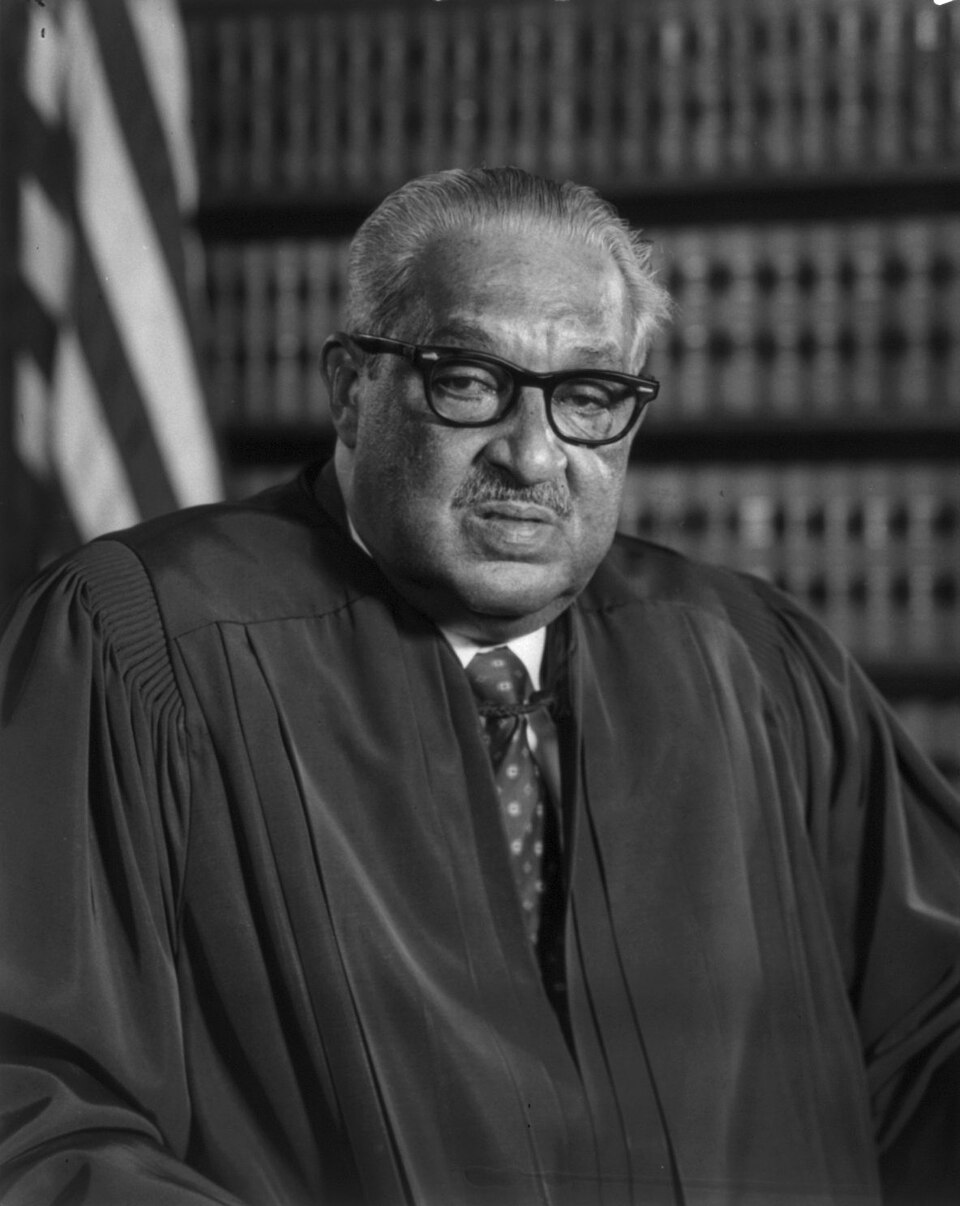
SCOTUS held that the utterances were protected by the First Amendment. In so doing, it announced a new test for deciding whether incitement is protected. Under this test, speech may be prohibited only if the speech is “likely to incite or produce imminent lawless action.” 52There is no question that the Brandenburg decision protected hate speech. The primary purpose of so doing was justification by illustration for not protecting speech in the Civil Rights Act. Anybody can see the potential for disruption at the workplace under laws which require both that an employer hire African-Americans and those who want them buried. However, if the Brandenburg utterances did not enjoy first amendment protection, an employer would not be required to hire those who made them even if discrimination on the basis of speech were to be prohibited. This is one reason for the Brandenburg holding. The other is Leviticus 20:13. Two African-American political objectives accomplished in one fell swooop.53 It is particularly disgusting that Thurgood Marshall joined in the per curiam opinion.
It is interesting to compare the Schenck standard with the Brandenburg standard. “Imminent” sounds an awful lot like present” and “clear” sounds an awful lot like “likely.” Anybody who thinks that the result in Dennis would have been different under the Brandenburg standard should be prepared to explain how the words “[clear and present danger] cannot mean that, before the Government may act, it must wait until the putsch is about to be executed, the plans have been laid and the signal is awaited” but the words “imminent lawless action” can. They should also be prepared to explain why the Supreme Court of Indiana, at least as of 1985, required that applicants for admission to the bar answer the question of whether they do belong or have ever belonged to the Communist Party. That’s sixteen years after the Brandenburg standard was announced.
That all having been said, it is a virtual certainty that today’s SCOTUS would rule that Charlie Kirk’s references to Leviticus 20:13 are protected by the First Amendment. Note again the similarity of the “bury the niggers” utterance in Brandenburg as compared to “they shall surely be put to death” contained in Leviticus 20:13. Note also SCOTUS’s track record when it comes to protecting Christian dogma. By pretending that the “imminent lawless action” standard is somehow different than the “clear and present danger” standard, the Brandenburg court insulated SCOTUS’s shift from the “any tendency” standard to the “clear and present danger” standard against an accusation that it was motivated by anticipation of German propaganda, and, at the same time, insulated Christianity from civil suits for citing Leviticus 20:13 with approval.
Holmes comments in the Frohwork case are worth repeating: “We venture to believe that neither Hamilton nor Madison, nor any other competent person then or later, ever supposed that to make criminal the counseling of a murder within the jurisdiction of Congress would be an unconstitutional interference with free speech.” If the earlier assertion that Holmes said this in an attempt to defeat the accusation that the then-new clear and present danger standard was promulgated to accommodate Leviticus 20:13 is correct, then the accusation is correct. If the earlier assertion is wrong, then add one more reason to conclude that Brandenburg was wrongly decided. Either way, it is clear that Todd Rokita’s approach to the Charlie Kirk homicide was exactly backwards. Kirks’ out of context and approving references to Leviticus 20:13 should never enjoy the protection of the First Amendment. It is clear that those who object to these references both should and do enjoy the protection of the First Amendment. Rokita’s threats of economic sanctions (terminations) against public employees who express their opinions objecting to Kirk’s references thus constitute a raw abuse of power. Many states have found it necessary to enhance punishment for crimes that are motivated by the victim’s sexual orientation. The Biblical stance on homosexuality is certainly at the root of at least some of these hate crimes. Rokita’s bad April Fools jokes do not help.
______________________________________________________________________________________________________________________________________________________________
1.395 U.S. 444(1969).
2.False Wisdom
3. 249 U.S. 47 (1919)
4. 249 U.S.at 52.
5. The remainder of the quote is, "The question in every case is whether the words used are used in such circumstances and are of such a nature as to create a clear and present danger that they will bring about the substantive evils that Congress has a right to prevent. It is a question of proximity and degree. When a nation is at war, many things that might be said in time of peace are such a hindrance to its effort that their utterance will not be endured so long as men fight, and that no Court could regard them as protected by any constitutional right. It seems to be admitted that, if an actual obstruction of the recruiting service were proved, liability for words that produced that effect might be enforced. The statute of 1917, in § 4, punishes conspiracies to obstruct, as well as actual obstruction. If the act (speaking, or circulating a paper), its tendency, and the intent with which it is done are the same, we perceive no ground for saying that success alone warrants making the act a crime." Ibid.
6. Kathleen M. Sullivan and Gerald Gunther, Constitutional Law, Foundation Press, (2201) at p. 969.
6.5. De Libellis Famosis, 77 Eng. Rep. 250 (K.B. 1606) (Coke)
7.[A]ny person shall write, print, utter or publish, or shall cause or procure to be written, printed, uttered or published, or shall knowingly and willingly assist or aid in writing, printing, uttering or publishing any false, scandalous and malicious writing or writings against the government of the United States, or either house of the Congress of the United States, or the President of the United States, with intent to defame the said government, or either house of the said Congress, or the said President, or to bring them, or either of them, into contempt or disrepute; or to excite against them, or either or any of them, the hatred of the good people of the United States, or to stir up sedition within the United States, or to excite any unlawful combinations therein, for opposing or resisting any law of the United States, or any act of the President of the United States, done in pursuance of any such law, or of the powers in him vested by the constitution of the United States, or to resist, oppose, or defeat any such law or act, or to aid, encourage or abet any hostile designs of any foreign nation against the United States, their people or government, then such person, being thereof convicted before any court of the United States having jurisdiction thereof, shall be punished by a fine not exceeding two thousand dollars, and by imprisonment not exceeding two years.
8. James Morton Smith, Freedom's Fetters: The Alien and Sedition Laws and American Civil Liberties, Cornell University Press (1956) at p. 325. (See also p. 346)
9. (See, Smith at 145, Smith at p. 234, Smith at p. 317, Smithat p. 369, (the Lyons, Haswell and Holt cases)
10. Smith at 377.
11. Ibid.
12.See Smith at 382 – all US armies are provisional
13.Smith at 314.
14.Smith at 320.
15. Under the Judiciary Act of 1789, Supreme Court Justices and also "rode circuit," and thus sometimes presided over trial held in the circuit courts. Chief Justice Oliver Ellsworth, and Associate Justices Bushrod Washington, Samuel Chase, William Paterson, and William Cushing all presided over proceddings in prosecutions brought under the Sedition Act.
16. Sullivan and Gunther at 959.
17.(ftnt case where D did at the trial level.)
18. But see Smith at 335.
19. Sullivan and Gunther at 959.
20. Ibid.
21. See Levy, Jefferson & Civil Liberties: Darker Side, The Belknap Press of Harvard University, 1963, p.46:
22. Levy did say that a “conviction that the Sedition Act was unconstitutional as well as mortally dangerous to freedom pierced [Jefferson’s] every thought on the subject” but then went on to say that his thinking was “ritualistic.” His words sound like nothing so much as rhetoric uttered for the purpose of legitimizing pardoning his cronies.
23. Sullivan and Gunther at 959.
24. See Smith, pp. 347; 348-349
25. Whoever, when the United States is at war, shall willfully make or convey false reports or false statements with intent to interfere with the operation or success of the military or naval forces of the United States, or to promote the success of its enemies, or shall willfully make or convey false reports, or false statements, ...or incite insubordination, disloyalty, mutiny, or refusal of duty, in the military or naval forces of the United States, or shall willfully obstruct ...the recruiting or enlistment service of the United States, or ...shall willfully utter, print, write, or publish any disloyal, profane, scurrilous, or abusive language about the form of government of the United States, or the Constitution of the United States, or the military or naval forces of the United States ...or shall willfully display the flag of any foreign enemy, or shall willfully ...urge, incite, or advocate any curtailment of production ...or advocate, teach, defend, or suggest the doing of any of the acts or things in this section enumerated and whoever shall by word or act support or favor the cause of any country with which the United States is at war or by word or act oppose the cause of the United States therein, shall be punished by a fine of not more than $10,000 or imprisonment for not more than 20 years, or both....)
26. Albert Schweitzer, The Quest of the Historical Jesus, (trans. Montgomery, Coates, Cupitt, and Bowden)SCM Press,2000 at pp. 14-26
27. Id, pp. 65-109.
28. Id, pp. 124-42.
29. Id, p. 304)
30. Id, p. 6.
31. Id, pp. 5-6.)
32. The first edition of the New English Bible translates Acts 1:6 as, "Lord, is this the time when you are to establish once again the sovereignty of Israel?"
33. Three facts amply support this claim. One is that he was effeminate (Johan Huizinga, Erasmus and the Age of Reformation, Phoenix Press, 2002, at p. 12 (“many feminine traits”). A second is the series of love letters written by Erasmus to Servatius Rogerus. (Id., at p. 11) Third is his “doting affection” for one of his students. (Id., at 26. Note that they were roughly the same age.) There have been attempts to dispute this claim. The letters have been explained as being of the type that was common in that era amongst platonic male friends, and that Servatius saved them for sentimental reasons. One of Servatius’ replies - “What’s wrong with you” - obliterates both of these explanations. By far the most likely scenario is that Erasmus’ letters to Servatius were envisioned as leverage to intimidate him into toeing the party line.
34. Joseph Smith, History of the Church, Deseret Book Co. 1980, V.7, p.1)
35. 136 U.S. 1 (1890).
36. Id. at p. 49.
37. Id. at p. 50.
38. 322 U.S. 78 (1944).
39. Id. at p. 86.
40. Id. at p. 87.
41. Id. at p. 95.
42. 341 U.S. 494 (1951)
43. Dennis, at p. 515.
44. 395 U.S. 444 (1969).
45. Id., Footnote 1.
46. 249 U.S. 204 (1919).
47. Id. at p. 206.
48. Publicity Stunt
49. Brandenburg at pp. 445-46.
50. Cincinatti is the birthplace of the National Association of Manufacturers; Ohio is the home state of William McKinley, famous for sponsoring protective tariffs, as well as Leon Czolgosz, the man who assassinated him after he "flipped" on the tariff issue and opposed war as a solution; Ohio is also Robert A. Taft's (the Taft in Taft-Hartley) home state; and the home of Kent State University.
51. Brandenburg, Footnote 1.
52. Id. at p. 447.
53. See Anti-Kennedy Animus
Portrait of Samuel Chase by John Wesley Jarvis